Leaderboard


Popular Content
Showing most thanked content since 01/04/2026 in all areas
-
8 pointsBy Deng Ming-Dao SEGMENTATION AND TRANSLATION See this block of text? It’s the arrangement of the first chapter of the Dàodéjīng before the last hundred years. If you open an old Chinese version of the Dàodéjīng, each chapter will be a block of text. No punctuation, word spacing, capital letters, or paragraphs. Distinguishing between single words and compound terms remains as much of a problem today as it was in ancient times. Imagine reading chapter 1 without the punctuation added in the early twentieth century. Reading the Dàodéjīng in its old form thus began with a practice called segmentation. You can find red dots, hóngdiǎn, 紅點, in the margins of used books, indicating where past readers began dividing, deciding, and decoding. This practice was called “sentence division,” jùdòu, 句讀, and is still done today when reading the received classics—and with only partial consensus: “Many researchers have tested Chinese native speakers’ word segmentation; a common finding is that participants can only reach about 75% agreement, and have difficulties replicating their own previous segmentation.” (Zhang, 2024) Even after the segmentation process, the text continues to challenge modern readers. The Dàodéjīng lacks plurality; past, present, or future tense; pronouns, conjunctions, prepositions; gendered nouns; or punctuation, word spacing, or paragraph indents. Sentences might not have a subject. Verbs lack conjugation. Moreover, Chinese ideograms are sometimes used singly and sometimes combined to make compound terms. Lǎozì may employ a compound term in one case and then use those constituent words separately in other cases. For example, line 71.1 uses the word for “know,” zhī, 知, four times: 知不知上不知知病. This translates to: “know don’t know superior; don’t know, know sick.” Bùzhī, 不知, means “not know.” Otherwise, zhī, 知, should be read as a single word. If you combine the issues of segmentation with the multiple-meanings of words, you can see that no single, absolutely “right” version is possible. Reading the Dàodéjīng in Chinese is like getting a box of ideograms on tiles, and then trying to assemble them as if it was a Scrabble game. This makes translation an interpretive as much as a critical process. Of course, everybody today will use the punctuated versions, but it’s worth remembering that segmentation is arbitrary and once had to be provided by each reader. Nevertheless, gaining the wisdom of the Dàodéjīng is well worth the effort! That's why it's survived for 2,600 years and has spread around the world.
-
7 pointsBack in the beginnings of TDBs, @Stigweard did a tremendous amount of work with foundational organization. He has recently been producing some insightful, wise, hilariously dark art, "Stuart Shaw Creations". on facebook https://www.facebook.com/stuartshawcreations and his own website https://stuartshawcreations.com/
-
7 pointsI have had what I call luminous dreams (which is just a name I give them not a significant claim) where the dreams are especially bright and also stay with you - you don't forget them like ordinary dreams. They are always very significant and meaningful. But most of my dreams are just rather confused and full of my own metal stresses and concerns. The luminous dreams seem to contain messages which last and are guidance for long periods of time. I've had quite a few pre-cognition dreams where I dream about things which later come true (sometimes many years later). This proves to me that time is not linear and that all that happens to us is interconnected. I think that to rest one's consciousness in the pristine consciousness itself is quite an achievement in itself. But as a goal it is limited as it presents as a separate state - so it is prone to abstraction and negation of life and the world. But it is part of something more complete. That more complete thing engages both the subtle and physical body - and this is where the 'work' is. Whether you work through dreams or not, or through meditation and other processes, there is a task to be undertaken. I think mahamudra and dzogchen do have a fault in that this task is disguised in a lot of talk of resting in the natural state etc. which is very misleading if not fully understood. I am big fan of Karma Pakshi's three kaya model where you engage with consciousness itself, the subtle body and the physical body to form the svabhaivika kaya - but that's a whole other story.
-
7 pointsMany of you know I don't post much these days, I just try to keep to myself, teach meditation to those who are interested and treat patients. Sadly, one of my students developed a massively superiority complex and I want to squish this drama before it can start. https://www.youtube.com/watch?v=0H9TghyCOwk The above video is him explaining how it took him only 3 months to faqi, misleading everyone through his completely skewed timeline. He is not only lying to everyone, he is offering teaching which he has no authority to do and posting videos that he was expressively asked not to. He is currently regularly seeing brother wu and made it clear that he only cares about his own financial gain and getting a return on his investment. He outright feels that anything he learned can be taught without repercussion and WITHOUT PERMISSION. He is not authorised to teach anything from Authenticneigong or Gengmenpai, the school of the late Master Jiang Feng headed now by Master Wu (Brother wu to me). I had to step in with this comment on his video. "I think I will just step in here before this turns into a unnecessary battle. Stephen started training with me in April 2022 ( I can prove this ), he took my seminar and did the practices that I teach. I took him on trips to get his health sorted, which was desperately needed. The reason it was free with Brother Wu, from gengmenpai, is because the blockages he had were already resolved on the trips with me. He didn't take 3 months to faqi, it took much longer, was completely and totally assisted. Don't take my word for it, take his own video recommendation for my teaching. This is where his dantian was activated in Nov 2022, this is why his progress was so good. Don't be a chump, give thanks and credit where it is due. This already puts his at training for 6 months, not 3 and his eventual assisted faqi came much later still. Also Stephen, Master Jiang specifically asked not to post his videos online, he doesn't want his face online and this is another thing you didn't respect or do. I am asking you now, to show some respect and do what is right. Take down all the videos you were not allowed to post, stop teaching practices you have no authority to teach." He has been lying about who who learned from and who helped him get there, he has been posting videos he has no permission to do, he has been teaching practices which he has no permission to do and has started attacking my student base for calling him out on his lies. Anyone in our discord can see old messages and Stephen posted often of his training, how grateful he was be learning and how he could feel the results, something very different from his recent online videos where he is trying to claim to be a messiah. Unfortunately my comments on his videos can easily be deleted so made this post to warn newcomers to not fall for these lies and definitely don't train with someone who is a beginner themselves. When things eventually go wrong, he was no way of helping you. Hope this helps people not fall into the trap of believing the delusions of a man who clearly does not respect the traditions of internal practices and lineages.
-
6 pointsGrandmaster Wong Kiew Kit passed away on March 1, 2026 in Malaysia. I had the opportunity to study with him in Miami (2005) and Orlando (2008) when he visited the U.S. These were good experiences for me, and I continue to study his methods to this day with one of his former students. I'm also grateful to him for his books. One of them mentioned and showed an illustration of Shibashi (not one of the forms he taught), which I became interested in and subsequently became a big part of my practice.
-
6 pointsWelcome to the Indigenous Traditions sub forum. This is a space for discussing traditional beliefs and practices from old cultures around the world, so we can share and learn from ancient wisdom, myth and method. As ever on this forum please commit to remaining respectful to those cultures and each other - and enjoy the conversation.
-
6 pointsI've noticed almost all the fire horse images this year are limiting or eliminating excess fire overtones, which makes sense given the times (that said I love the fiery vitality of Kakapo's horse). But I've seen some interesting brush art that could be a alternative (note: someone should check the characters if we go this route as I just pulled this off the net): Has that vitality / free spirited horse energy without the war undertones. There are a lot of good looking similar ones out there if a more horizontal one would fit better.
-
6 pointsOhhhh , okay then I will draw one up myself then .
-
6 points
-
5 pointsI've practiced qigong for about 20 years. One thing I've learned is that my expectations need to be realistic. Certainly there are benefits from the forms I practice but qigong has not proven to be a comprehensive and complete system for me. I practice both Shiba Luohangong and Ba Duan Jin and derive valuable and different benefits from each. I have also continued to practice internal Chinese martial arts over that period of time - taijiquan, xingyiquan, and baguazhang. While I no longer compete or train martially with others, these have found a valuable role in my physical, energetic, and mental health. Finally, perhaps most important to me is my meditation practice from a Tibetan tradition. While I do think it's important to stick with a practice for a long time to really probe its depth and potential, I don't know that each one of us can expect to find a single practice or system that does everything we are looking for. Some do and that is wonderful but it hasn't been that way for me. I also think that we need to listen to our body and mind and maintain some openness and flexibility as our needs can change over time.
-
5 pointsI dreamed you were going to delete that.
-
5 pointsWhatdaya think?
-
5 pointsPerhaps what we need is a water horse to balance and calm things down a bit.
-
5 pointsSee what you think!
-
5 points
-
5 points( Not sure if this should be in this general section or the teachers sections ? Mods, feel free to move it ) First, I am not going to try to sell you anything or 'sign you up' for lessons . This about the Tao te Ching ... not the Tao te Ka-Ching! ' Ch 1 . There is this thing . Its also not a thing . Also it is both a thing and not a thing. It also is neither a thing or not a thing. It is all of the above . But it isn't any of them . If you have dont want stuff well - that's a mystery ! If you do want stuff The whole manifested Universe awaits you . let;s say you have two spring rolls both may have the same sauce but they can have different names depending on whats inside them and that can be a mystery of mysteries . Ch 2 You think my sister looks hot but that's because Yo Momma be ugly. You guys can only see either end of the line . But the Sage just sees the whole line . You cant have stuff without no stuff. Stuff is just lines , not ends . Back always follows front otherwise you be chasing your own tail. Ch 3 If you flatter people they will try harder to impress you. If you overvalue stuff you will pay more for it. Try to please people and they will get suspicious. Forget what you know and what you want Stop doing stuff all the time ! Ch 4 If the thing is empty and has no source it cant run out alls it got is little potential n+ s and n- s that make nuthings . Then put your hara in the center of all that . Ch 5 the Universe is neutral Judgement is based on comfort . The space between heaven and earth is the atmosphere It can get windy Stick to the surface or you could get blown away . Ch 6 The valley here is under a 'Big Mom' dome . My teacher said just ask her for whatever you want - you'll get it . Ch 7 heaven and earth last forever Why do heaven and earth last forever ? I just told you it did stop asking questions. If you dont do anything you cant fail at it . Ch 8 be like water then you will be good for all living things and flow along without thinking where you are going who knows where you will end up ? But dont be an arsehole about it . Ch 9 Stop taking and using up all our stuff ! Dont re-tune your lawnmower if it doesnt need it. leave things alone , fer Gawd's sake ! Ch 10 if you can be like a baby woman thats good . (tbc)
-
4 pointsI know very little about your Grandmaster and his teachings but I know you are a very dedicated practitioner Dainin. I am confident that you will be a vehicle through which his legacy will live on and benefit others. My condolences on your loss _/\_
-
4 pointsFriends, After 7 long years, I have finally completed the 2nd book of my trilogy. Please read and support. Best, Dwai https://www.amazon.com/dp/B0GLT43ZF8
-
4 points
-
4 pointsDon't allow the energy flow to your head - brain, as that has severe risks of making one smarter, making one realize their destiny and spiritual path, leading them away from scamgong teachings and worthless practices. You don't want that. Stay grounded.
-
4 pointsworse still is when some individual sets themselves up as such an adviser ... a sort of 'judgmental guru ' and also individuals adopting it to project out onto others ; 'would be Louise Hay's' ; to some unfortunate ; ''Oh, you stubbed your toe ? Why are you afraid of moving forward ? '' I want to shove their judgmental little faces in it ! I remember once , being in our amenities block , we were flooded in , I had a double middle ear infection - terrible and no medication . This New Age bitch walks in and asks what is wrong with me ( as I am obviously in a great deal of pain and hanging on to a sink to even be able to stand up ) I tell her , does she offer assistance , pain relief she might have at home ... any thing even remotely kind ? NO ; '' OH really ( and even in a smarmy , I am smart , look what I know about , voice ) ... what is it you dont want to hear then ?'' Me '' I will tell you what I dont want to hear , some inconsiderate new age, self appointed 'guru' scoring points on my pain and suffering so they can appear clever .' I read once where someone asked their Rabbi about this ; if an accident or sickness might carry a special message for you . The Rabbi said , of course it can , God works in all sorts of ways . The person protested a bit and explained some things , like I mentioned above . The Rabbi was ; '' Wait a minute , I didnt understand you , what I said was true but are you saying some people are interpreting the meaning and significance of these for others ? What ! That's outrageous ! How dare anyone try to interpret or give the meaning to someone else about God's particular and private dealings with them ! ' That is between you and God ! That isnt even the job of a Rabbi ! ''
-
4 pointsHappy New Year Sifu Terry and all the Flying Phoenix Practitioners! Or as we say in Singapore, gong xi fa cai!! Huat ah!!! Looking forward to reading both the FP book and the TTP book!
-
4 points• HAPPY NEW YEAR OF THE FIRE HORSE !!! • May New Year's blessings and good karma come to you with freedom, speed, high intensity, and great and blissful duration!
-
4 pointsAgreed. Especially since we had a gallop poll and everything!
-
4 pointsAre you saying you wish people would stop horsing around?
-
4 pointsThey fear this Animal. Well for starters: "Quod es fui quod sum eris" That is "what you are, I was; what I am, you will be." So nothing to fear because WE ALL BECOME A FIRE HORSE starting on 17 February this year and ending on 5 February 2027. Likewise on 2020 and the fear the Metal Rat brought along (pandemic). Humanity lived in fear that year. Rat = Water = Kidney and associated emotion Fear. The Horse is Fire = Heart = Wisdom = Joy Time to look within your Heart and resolve blockages in the organ and associated meridian of energy (unresolved chronic anger, resentment, hatred, restlessness, palpitations, insomnia...) The Horse is the only Animal that entails complete change and transformation, which is a wonderful thing. There will be a new YOU emerging after the Year is over. Enjoy the Fire Horse.
-
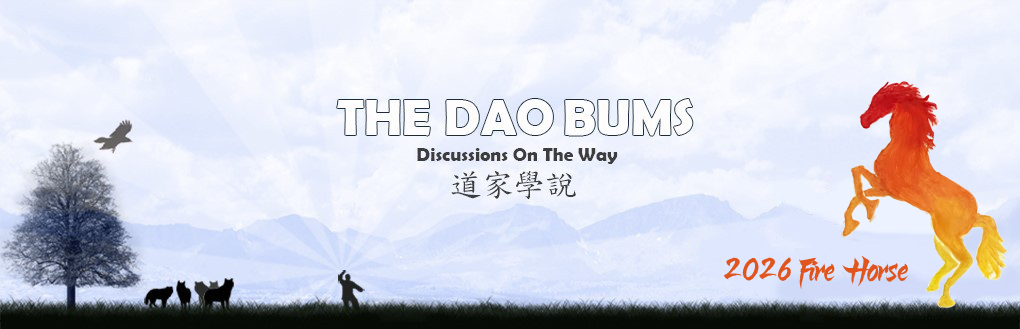
4 pointsHi It is time to change the image on the header for the new year ... to Fire Horse. If you have a suitable image please submit it or a link to it in the next few days. @liminal_luke will arrange for the artwork based on the best image- NB. My little pony is probably not what we are looking for
-
4 pointsI practice because I can, and it helps keep the mirror of my mind clean from the proverbial red dust of this world.
-
4 pointsYour method for dream work is very similar to the method in my tradition for working with any experience, including dreams. Just as you recreate and embody the dream in your mind and feelings, we do the same with any experience or person that generates reactivity. These can be very recent experiences, alive in us at this very moment. They can be remote memories, dreams, people who generate reactivity, future worries, any life experience. We turn to the experience if it is active in the moment, or recreate whatever it is we want to work with as vividly as possible in body, speech, and mind. We sit with that for as long as it is fresh and alive. While we don't engage with it intellectually, we are often taken to earlier times and other experiences that may have some connection, often a connection we were not aware of. The one thing that may be a bit different is that we are working with the sense of a "me" who is being affected by the experience rather than hosting the experience itself. It's a very subtle but important difference in our paradigm. And we rest in the stillness, silence, and spaciousness. This is referred to as hosting pain identities. . It's a wonderful and powerful practice and one way we avoid the bypassing that can so easily happen to practitioners.
-
4 pointsPart of my method for dream work is to “feel the feeling” after the dream has been interpreted to the best of one’s ability, which I did by recreating the dream in my mind and allowing myself as much as possible to re-enter the feeling created by the dream image. Doing this for decades, slowly getting better at it, allows the full force of a feeling to be experienced over time, and really this is what a fully open emotional channel is. Rumi’s poem captures the work perfectly - The Guest House Rumi Translated by Coleman Barks This being human is a guest house. Every morning a new arrival. A joy, a depression, a meanness, some momentary awareness comes as an unexpected visitor. Welcome and entertain them all! Even if they’re a crowd of sorrows, who violently sweep your house empty of its furniture, still, treat each guest honorably. He may be clearing you out for some new delight. The dark thought, the shame, the malice, meet them at the door laughing, and invite them in. Be grateful for whoever comes, because each has been sent as a guide from beyond.
-
4 pointsThis probably belongs here for reference ; https://www.boandbon.com/
-
4 pointsCome to think of it, most words that refer to ideas, concepts, mental constructs, interpretations, all that "vaporware" of human cognition, are similarly problematic. We use them as though they are qualitative and quantitative, whereas they are semantic conventions born of contentions. Often they define what is really indefinite, what barely exist, or does't exist at all. With tangible material things the grey zone is a lot smaller, but still... I sit in an office chair. I bought it as an "office chair," but if I put a dining-room chair in my office instead, in that same spot in front of the computer, will it become an office chair? Will it lose its dining-room chair citizenship? Will it become a naturalized citizen of the office? Will it surrender its dining-room allegiances and swear to fight all enemies of the office, foreign and domestic? And will the indigenous residents of the office -- computer, printer, filing cabinet -- see it as an office chair, as "one of us?" And will it forget all those family dinners it was part of in its native dining-room, all its dining-room mates from the same set still gathered around the dining-room table, still indigenous?..
-
4 pointsThought I’d share this on the Babaylan indigenous culture of the Philippines. I have participated in some of these rituals and found them both powerful and fascinating particularly seeing the connections to Indian and Chinese language, physical and spiritual cultivation and healing cultures that are part of it. My wife’s grandmother was a traditional practitioner of this and the capabilities of her lineage appear to have been passed on to the women in my immediate family. The video talks about the indigenous experience in confronting Christianity and Islam as well as the role of gender including transgender there. My guess is that many indigenous practices in other parts of the world went through similar processes where they interacted with/were changed by outside cultures trying to control them. In the modern era the Babaylan culture mostly manifests as indigenous healing practices like manghihilot which are still widespread in the Philippines but there also still exists behind this those currently following the culture and practices of the Babaylan. My understanding this tradition was not only affected by Catholicism and Islam but also more recently by American Protestant missionaries who carved up the Philippines in the 20th century into areas of authority to proselytize and before Catholicism and Islam by Buddhist and Hindu influences. These earlier Indian influences can be seen in the language, traditional scripts, as well as in the healing practices. https:// 1 justjoseph responded to this Quote Edit
-
4 pointsThis is typical Chūnibyō syndrome stuff. Many of the threads where this is mentioned were moved to the staff eyes only section, and can no longer be found via google. Here are a few examples, but these are pretty tame comparatively. https://www.thedaobums.com/topic/50649-brain-cleansing-in-the-internal-arts/?do=findComment&comment=922530 "Thats why for example, I could watch 20k+ 1000hz high quality movies, or remember past lives, or visualize a whole city projection." https://www.thedaobums.com/topic/50381-levitation-and-possibly-flight/?do=findComment&comment=922713 Question: As far as delusions go, you claim to have a harem of goddesses, shoot eye lasers, travel faster than the speed of light, open portals to other worlds to fight ancient 100,000 Naga demons, etc. Answer: "Those aint delusions, these are tiny percentage of extracts from things I have personally encountered on other planes. I have met and seen things you cannot even phantom." https://www.thedaobums.com/topic/50710-questions-to-master/?do=findComment&comment=924660 "I had brain implants and other stuff." https://www.thedaobums.com/topic/50755-divine-truths-from-master/?do=findComment&comment=926199 "I can easily capture your soul after it leaves the body, and put it inside the stone in my magic underground basement lab. You will be my guest for next 1000 years, and mb you will also learn something, but I will never let you back into "free" life. I might allow you to reincarnate in some of my lab rats." https://www.thedaobums.com/topic/50720-what-is-taoism/?do=findComment&comment=926138 "Having third Eye open I can see things that normal humans never can imagine, like a tentacle larvae crawling over an energy egg shaped field which is human. https://www.thedaobums.com/topic/49762-request-access-to-private-gender-subforums/?tab=comments#comment-926426 I am sitting in mountains and meditating while having multiple clones, and one of the clones is dreaming, and he goes internet from dreamworld without any "new age" devices like computer or phone. Old school is best school. " https://www.thedaobums.com/topic/50781-western-mopai-censorship-for-sean/?do=findComment&comment=926903 "I have passed through several galaxies in the matter of seconds, so yeah, I was travelling at a much higher speed than Light." https://www.thedaobums.com/topic/50720-what-is-taoism/?do=findComment&comment=926577 "Because to go through 1 million years of my own memories of past lives it is quite a work to do unlike googling baidu to find divine truths. When I will be 2000 times stronger than I am now, I may commit myself to this research." https://www.thedaobums.com/topic/50781-western-mopai-censorship-for-sean/?do=findComment&comment=926930 "I was never hurt by people making fun of my levitation ... or portal opening ability. I have had too much of these experiences to be able to doubt it or care about someone else opinion on the topic."
-
4 pointsDo not bring external feuds into this website or you may be banned. I’m locking this thread - no more discussion on this please.
-
4 pointsOk Just expressing how I feel about it. No worries (as I said before) I will be fine with whatever the admods decide.
-
4 pointsThis can not be happening .
-
4 pointsI think your fire horse looks good. Here is one that includes the heart/mind fire, giving it a bit of alchemical flavor. Not sure this fits the astrological view but it’s a good reminder to not to be emotionally carried away by the changes the year brings. Horse is surrounded by fire but is still pretty chill for a horse surrounded by fire.
-
4 pointsSo there was this word, orkhestra, in Ancient Greek. Latin borrowed it thence as orchestra, English borrowed it from Latin as orchestra, and then Japanese borrowed it from English, predictably, as okesutora. Then the Japanese added kara -- empty -- and created karaokesutora, empty orchestra, which they then condensed/shortened into karaoke. Then English borrowed from Japanese this new word, karaoke. Italian (derived from Latin) and Modern Greek (derived from Ancient Greek) borrowed it from English and got their own karaoke. Etymology is strange.
-
4 pointsI know it's been awhile since I was last here, and I still don't really plan on being active but there were some pretty cool people that I just wanted to drop in and give an update to. So last summer I moved to Germany to get away from the United States for obvious reasons. I'm very happy I left the US and I love Germany.
-
4 pointsI haven't seen this one before .... and never noticed a discussion here on it . Eg Ch 1 If you can talk about it, it ain’t Tao. If it has a name, it’s just another thing. Tao doesn’t have a name. Names are for ordinary things. Stop wanting stuff; it keeps you from seeing what’s real. When you want stuff, all you see are things. Those two sentences mean the same thing. Figure them out, and you’ve got it made.
-
4 pointsI appreciate @bradley's weird thought... mine is similar. Karma to me is simply the causal connection between actions and outcomes. I once had a deep insight into karma in my own life and experience that informed my understanding of the concept. I could see very deeply and clearly how every action and interaction throughout my life have come together to bring me to precisely where I am at that very moment. I could see how different choices on my part, or that of others, and my situation would be completely different. I could see the pattern of cause and effect extending back before my birth and beyond my death. I could see the web of interaction extending out in all directions, across vast distances without boundary. Most of all I could see the sheer scale and complexity of this intricate web of activity and how this makes it so difficult to always appreciate the direct connection between a given action and its effects. Dharma has many meanings in a variety of religions and contexts. It can mean something that is firm and stable, suggesting a foundational or organizing principle or law of existence. It can refer to the way we, as individuals, relate to the world and to others and varies at different stages of life. It is often used to refer to the teachings of Buddha Shakyamuni. For me, the most meaningful and useful interpretation relates more to the truth or the absolute nature of being. In the tradition I practice, the ground of being is considered the source of all teachings and all possible manifestations; so that coming into relationship with this fundamental experience of our nature opens us to our full potential as human beings.
-
4 pointsAfter a year, it seems like your problems are ongoing, and none of the suggestions here are likely to work. I'm going to lock this thread and just suggest that you lean on proven, practical Western medicine for your issues, first and foremost. Go to a general practitioner and seek a counselor to talk about these issues and they might be able to help diagnose your issues and get you back on track. Thanks to all of the concerned Bums who have chimed in. _/\_ - Stirling (Mod)
-
4 pointsWhile I realise that this thread might be cathartic or therapeutic for some of the posters on here, for most of us it just serves as a warning not to have anything to do with anyone involved. I think it might be worth while thinking about what exactly the purpose of all this bickering online is. As a moderator I am considering locking the thread as I don’t want the board consumed by this dispute. A.
-
4 pointsThis. If all one sees is evil, then the world is evil. Turning off the news and not doom scrolling all the time helps to see things as they are. Good and evil are always present. Originally though, good and evil are empty. Now, where do thoughts come from? That's the question that liberates. _/|\_
-
4 pointsScientific materialism is an invasive ideology which tempts you to reduce everything to the banal. Hence qi is oxygen becomes an attractive and unchallenging proposition. Your safe world view remains unchallenged but such safety is actually your prison.
-
4 pointsYeah, and then there's hyperoxia, a life-threatening medical condition caused by too much oxygen. Oxygen toxicity is a well-known phenomenon, symptoms include pleuritic chest pain, coughing, dyspnea, tracheobronchitis and pulmonary edema, to name a few. Whereas there is no amount of qi in the human body that is toxic to the human body. A wonderful taoist rule of thumb: do not define something via what it "is," describe it via what it isn't. Wield that Occam's razor with a firm hand. If too much "something" can do things to the body which no amount of qi can do to the body, that "something" isn't qi. Be it oxygen, chocolate, ice cream, electricity, or what have you. Qi is not interchangeable with anything at all. Understanding qi only starts (sic!) when one stops equating it to something else they happen to be familiar with. There is no something else that "is" qi. Just like there is no other gas that can replace oxygen in the blood, there is no other phenomenon that can replace qi in the taoist paradigm. Oxygen is oxygen. Qi is qi. Every traditionally trained and educated (key word every word in italics) taoist practitioner has heard of "qi leads blood," "qi is the general of blood" in this or that context, whether medical, martial or magical. Blood is what carries oxygen to the organs and systems of the body, but to get oxygen into the blood, one has to have qi to lead and guide it. The general and the army are connected, but most definitely they aren't the same entity. The general leads, the army follows. Qi leads, oxygen follows. Unless one is dealing with a rebellious general starting a coup -- aka "rebellious qi," the term for some pretty nasty health disorders, including mental disorders.
-
4 pointsThen the devil played another trick; convincing the the world there was only one devil. Ah folks see it. How could it be invisible? It's been broadcasted non-stop to the point, folks have become desensitized to it. "Rocking the boat" causes collateral damage as well. It isn't that folks are scared and weak, it is a sobering situation, and needs addressed in a way not rushed, which plays into the elites hands. Oh, shit, did I equate elites with evil?! Not necessarily, although,,, Don't hold your breath on everyone uniting as one. There are small groups that have stated objectives of holding accountable the ones who are dangled by the strings. The ones dangling and tugged by those strings are the truly weak. These intrigues are often inside jobs and border on the political fringes What usually happens in times like these, when the curtain has been drawn open and evil takes off its mask, is the world is dragged into major war. The 4th generation theory Because it is held by the elites that after a big war, folks can be controlled for three generations. Civil wars prevent revolution. Evil has carefully constructed presumably safe haven hideouts to weather the coming storm and the rest of us face horrendous odds of merely surviving. Let alone, feel good about it. There was a mural I was shown in 1978, in an air force hardened bunker,9 forecasting today's landscape and the coming aftermath; there was a caption: "The living will envy the dead" Apologies everyone for posting this. And, sometimes perhaps, predictive murals get it wrong. There is always hope. There are already places where there is no room for the faint of heart. Perhaps coming soon to a location near you. So, there could be some facsimile of a grand uprising. They do occur, rarely. Civil wars, mixed with the larger war mostly. Every now and then a true revolution. My approach is on the side of choosing to be Meek. Not to be confused with weak. A holistic grass roots effort, emphasizing kindness and service to the poor and downtrodden.i deliver meals to disabled seniors it is a little thing. But enough little things by those on the other side of the spectrum than the elite, do add up.
-
4 pointsThere´s plenty of bad around if you look for it. And yet the sun still shines and the grass still grows. Look around and you´ll discover people painting, writing books, eagerly awaiting the right time to plant spring flowers. Kindness is everywhere. To see the good is not to deny the bad; on the contrary, our awareness of the good will give us the strength we need to deal with the darkness.
-
4 pointsElizabeth Gilbert, author of the much-acclaimed book Eat, Pray, Love, recently wrote about her desire to murder her terminally-ill drug-addicted lesbian lover. Not everyone considers radical honesty a virtue, and response to Gilbert´s confession has been decidedly mixed. Should she have saved the more gruesome details of her relationship for an intimate fireside chat with close friends? I think so. I´ll save the juiciest details of my own misadventures for those who deserve my heart.








.thumb.jpg.dec3ed0d837a7d44c365eb5d82a9756c.jpg)