Leaderboard



Popular Content
Showing most thanked content since 02/07/2026 in all areas
-
7 pointsGrandmaster Wong Kiew Kit passed away on March 1, 2026 in Malaysia. I had the opportunity to study with him in Miami (2005) and Orlando (2008) when he visited the U.S. These were good experiences for me, and I continue to study his methods to this day with one of his former students. I'm also grateful to him for his books. One of them mentioned and showed an illustration of Shibashi (not one of the forms he taught), which I became interested in and subsequently became a big part of my practice.
-
7 pointsBack in the beginnings of TDBs, @Stigweard did a tremendous amount of work with foundational organization. He has recently been producing some insightful, wise, hilariously dark art, "Stuart Shaw Creations". on facebook https://www.facebook.com/stuartshawcreations and his own website https://stuartshawcreations.com/
-
7 pointsI have had what I call luminous dreams (which is just a name I give them not a significant claim) where the dreams are especially bright and also stay with you - you don't forget them like ordinary dreams. They are always very significant and meaningful. But most of my dreams are just rather confused and full of my own metal stresses and concerns. The luminous dreams seem to contain messages which last and are guidance for long periods of time. I've had quite a few pre-cognition dreams where I dream about things which later come true (sometimes many years later). This proves to me that time is not linear and that all that happens to us is interconnected. I think that to rest one's consciousness in the pristine consciousness itself is quite an achievement in itself. But as a goal it is limited as it presents as a separate state - so it is prone to abstraction and negation of life and the world. But it is part of something more complete. That more complete thing engages both the subtle and physical body - and this is where the 'work' is. Whether you work through dreams or not, or through meditation and other processes, there is a task to be undertaken. I think mahamudra and dzogchen do have a fault in that this task is disguised in a lot of talk of resting in the natural state etc. which is very misleading if not fully understood. I am big fan of Karma Pakshi's three kaya model where you engage with consciousness itself, the subtle body and the physical body to form the svabhaivika kaya - but that's a whole other story.
-
6 pointsWelcome to the Indigenous Traditions sub forum. This is a space for discussing traditional beliefs and practices from old cultures around the world, so we can share and learn from ancient wisdom, myth and method. As ever on this forum please commit to remaining respectful to those cultures and each other - and enjoy the conversation.
-
5 pointsI've practiced qigong for about 20 years. One thing I've learned is that my expectations need to be realistic. Certainly there are benefits from the forms I practice but qigong has not proven to be a comprehensive and complete system for me. I practice both Shiba Luohangong and Ba Duan Jin and derive valuable and different benefits from each. I have also continued to practice internal Chinese martial arts over that period of time - taijiquan, xingyiquan, and baguazhang. While I no longer compete or train martially with others, these have found a valuable role in my physical, energetic, and mental health. Finally, perhaps most important to me is my meditation practice from a Tibetan tradition. While I do think it's important to stick with a practice for a long time to really probe its depth and potential, I don't know that each one of us can expect to find a single practice or system that does everything we are looking for. Some do and that is wonderful but it hasn't been that way for me. I also think that we need to listen to our body and mind and maintain some openness and flexibility as our needs can change over time.
-
5 pointsI dreamed you were going to delete that.
-
5 pointsWhatdaya think?
-
4 pointsI know very little about your Grandmaster and his teachings but I know you are a very dedicated practitioner Dainin. I am confident that you will be a vehicle through which his legacy will live on and benefit others. My condolences on your loss _/\_
-
4 points
-
4 pointsDon't allow the energy flow to your head - brain, as that has severe risks of making one smarter, making one realize their destiny and spiritual path, leading them away from scamgong teachings and worthless practices. You don't want that. Stay grounded.
-
4 pointsworse still is when some individual sets themselves up as such an adviser ... a sort of 'judgmental guru ' and also individuals adopting it to project out onto others ; 'would be Louise Hay's' ; to some unfortunate ; ''Oh, you stubbed your toe ? Why are you afraid of moving forward ? '' I want to shove their judgmental little faces in it ! I remember once , being in our amenities block , we were flooded in , I had a double middle ear infection - terrible and no medication . This New Age bitch walks in and asks what is wrong with me ( as I am obviously in a great deal of pain and hanging on to a sink to even be able to stand up ) I tell her , does she offer assistance , pain relief she might have at home ... any thing even remotely kind ? NO ; '' OH really ( and even in a smarmy , I am smart , look what I know about , voice ) ... what is it you dont want to hear then ?'' Me '' I will tell you what I dont want to hear , some inconsiderate new age, self appointed 'guru' scoring points on my pain and suffering so they can appear clever .' I read once where someone asked their Rabbi about this ; if an accident or sickness might carry a special message for you . The Rabbi said , of course it can , God works in all sorts of ways . The person protested a bit and explained some things , like I mentioned above . The Rabbi was ; '' Wait a minute , I didnt understand you , what I said was true but are you saying some people are interpreting the meaning and significance of these for others ? What ! That's outrageous ! How dare anyone try to interpret or give the meaning to someone else about God's particular and private dealings with them ! ' That is between you and God ! That isnt even the job of a Rabbi ! ''
-
4 pointsHappy New Year Sifu Terry and all the Flying Phoenix Practitioners! Or as we say in Singapore, gong xi fa cai!! Huat ah!!! Looking forward to reading both the FP book and the TTP book!
-
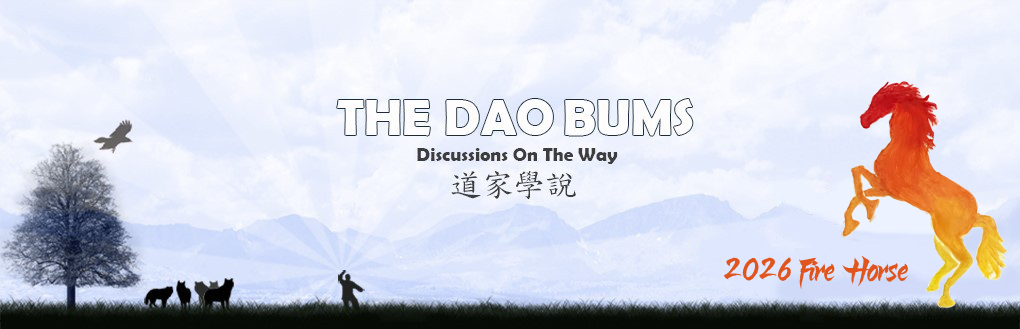
4 points• HAPPY NEW YEAR OF THE FIRE HORSE !!! • May New Year's blessings and good karma come to you with freedom, speed, high intensity, and great and blissful duration!
-
4 pointsAgreed. Especially since we had a gallop poll and everything!
-
4 pointsAre you saying you wish people would stop horsing around?
-
4 pointsThey fear this Animal. Well for starters: "Quod es fui quod sum eris" That is "what you are, I was; what I am, you will be." So nothing to fear because WE ALL BECOME A FIRE HORSE starting on 17 February this year and ending on 5 February 2027. Likewise on 2020 and the fear the Metal Rat brought along (pandemic). Humanity lived in fear that year. Rat = Water = Kidney and associated emotion Fear. The Horse is Fire = Heart = Wisdom = Joy Time to look within your Heart and resolve blockages in the organ and associated meridian of energy (unresolved chronic anger, resentment, hatred, restlessness, palpitations, insomnia...) The Horse is the only Animal that entails complete change and transformation, which is a wonderful thing. There will be a new YOU emerging after the Year is over. Enjoy the Fire Horse.
-
4 pointsI practice because I can, and it helps keep the mirror of my mind clean from the proverbial red dust of this world.
-
4 pointsYour method for dream work is very similar to the method in my tradition for working with any experience, including dreams. Just as you recreate and embody the dream in your mind and feelings, we do the same with any experience or person that generates reactivity. These can be very recent experiences, alive in us at this very moment. They can be remote memories, dreams, people who generate reactivity, future worries, any life experience. We turn to the experience if it is active in the moment, or recreate whatever it is we want to work with as vividly as possible in body, speech, and mind. We sit with that for as long as it is fresh and alive. While we don't engage with it intellectually, we are often taken to earlier times and other experiences that may have some connection, often a connection we were not aware of. The one thing that may be a bit different is that we are working with the sense of a "me" who is being affected by the experience rather than hosting the experience itself. It's a very subtle but important difference in our paradigm. And we rest in the stillness, silence, and spaciousness. This is referred to as hosting pain identities. . It's a wonderful and powerful practice and one way we avoid the bypassing that can so easily happen to practitioners.
-
4 pointsPart of my method for dream work is to “feel the feeling” after the dream has been interpreted to the best of one’s ability, which I did by recreating the dream in my mind and allowing myself as much as possible to re-enter the feeling created by the dream image. Doing this for decades, slowly getting better at it, allows the full force of a feeling to be experienced over time, and really this is what a fully open emotional channel is. Rumi’s poem captures the work perfectly - The Guest House Rumi Translated by Coleman Barks This being human is a guest house. Every morning a new arrival. A joy, a depression, a meanness, some momentary awareness comes as an unexpected visitor. Welcome and entertain them all! Even if they’re a crowd of sorrows, who violently sweep your house empty of its furniture, still, treat each guest honorably. He may be clearing you out for some new delight. The dark thought, the shame, the malice, meet them at the door laughing, and invite them in. Be grateful for whoever comes, because each has been sent as a guide from beyond.
-
4 pointsThis probably belongs here for reference ; https://www.boandbon.com/
-
4 pointsCome to think of it, most words that refer to ideas, concepts, mental constructs, interpretations, all that "vaporware" of human cognition, are similarly problematic. We use them as though they are qualitative and quantitative, whereas they are semantic conventions born of contentions. Often they define what is really indefinite, what barely exist, or does't exist at all. With tangible material things the grey zone is a lot smaller, but still... I sit in an office chair. I bought it as an "office chair," but if I put a dining-room chair in my office instead, in that same spot in front of the computer, will it become an office chair? Will it lose its dining-room chair citizenship? Will it become a naturalized citizen of the office? Will it surrender its dining-room allegiances and swear to fight all enemies of the office, foreign and domestic? And will the indigenous residents of the office -- computer, printer, filing cabinet -- see it as an office chair, as "one of us?" And will it forget all those family dinners it was part of in its native dining-room, all its dining-room mates from the same set still gathered around the dining-room table, still indigenous?..
-
4 pointsThought I’d share this on the Babaylan indigenous culture of the Philippines. I have participated in some of these rituals and found them both powerful and fascinating particularly seeing the connections to Indian and Chinese language, physical and spiritual cultivation and healing cultures that are part of it. My wife’s grandmother was a traditional practitioner of this and the capabilities of her lineage appear to have been passed on to the women in my immediate family. The video talks about the indigenous experience in confronting Christianity and Islam as well as the role of gender including transgender there. My guess is that many indigenous practices in other parts of the world went through similar processes where they interacted with/were changed by outside cultures trying to control them. In the modern era the Babaylan culture mostly manifests as indigenous healing practices like manghihilot which are still widespread in the Philippines but there also still exists behind this those currently following the culture and practices of the Babaylan. My understanding this tradition was not only affected by Catholicism and Islam but also more recently by American Protestant missionaries who carved up the Philippines in the 20th century into areas of authority to proselytize and before Catholicism and Islam by Buddhist and Hindu influences. These earlier Indian influences can be seen in the language, traditional scripts, as well as in the healing practices. https:// 1 justjoseph responded to this Quote Edit
-
4 pointsThis is typical Chūnibyō syndrome stuff. Many of the threads where this is mentioned were moved to the staff eyes only section, and can no longer be found via google. Here are a few examples, but these are pretty tame comparatively. https://www.thedaobums.com/topic/50649-brain-cleansing-in-the-internal-arts/?do=findComment&comment=922530 "Thats why for example, I could watch 20k+ 1000hz high quality movies, or remember past lives, or visualize a whole city projection." https://www.thedaobums.com/topic/50381-levitation-and-possibly-flight/?do=findComment&comment=922713 Question: As far as delusions go, you claim to have a harem of goddesses, shoot eye lasers, travel faster than the speed of light, open portals to other worlds to fight ancient 100,000 Naga demons, etc. Answer: "Those aint delusions, these are tiny percentage of extracts from things I have personally encountered on other planes. I have met and seen things you cannot even phantom." https://www.thedaobums.com/topic/50710-questions-to-master/?do=findComment&comment=924660 "I had brain implants and other stuff." https://www.thedaobums.com/topic/50755-divine-truths-from-master/?do=findComment&comment=926199 "I can easily capture your soul after it leaves the body, and put it inside the stone in my magic underground basement lab. You will be my guest for next 1000 years, and mb you will also learn something, but I will never let you back into "free" life. I might allow you to reincarnate in some of my lab rats." https://www.thedaobums.com/topic/50720-what-is-taoism/?do=findComment&comment=926138 "Having third Eye open I can see things that normal humans never can imagine, like a tentacle larvae crawling over an energy egg shaped field which is human. https://www.thedaobums.com/topic/49762-request-access-to-private-gender-subforums/?tab=comments#comment-926426 I am sitting in mountains and meditating while having multiple clones, and one of the clones is dreaming, and he goes internet from dreamworld without any "new age" devices like computer or phone. Old school is best school. " https://www.thedaobums.com/topic/50781-western-mopai-censorship-for-sean/?do=findComment&comment=926903 "I have passed through several galaxies in the matter of seconds, so yeah, I was travelling at a much higher speed than Light." https://www.thedaobums.com/topic/50720-what-is-taoism/?do=findComment&comment=926577 "Because to go through 1 million years of my own memories of past lives it is quite a work to do unlike googling baidu to find divine truths. When I will be 2000 times stronger than I am now, I may commit myself to this research." https://www.thedaobums.com/topic/50781-western-mopai-censorship-for-sean/?do=findComment&comment=926930 "I was never hurt by people making fun of my levitation ... or portal opening ability. I have had too much of these experiences to be able to doubt it or care about someone else opinion on the topic."
-
4 pointsDo not bring external feuds into this website or you may be banned. I’m locking this thread - no more discussion on this please.
-
4 pointsOk Just expressing how I feel about it. No worries (as I said before) I will be fine with whatever the admods decide.
-
3 pointsHi everyone, I’ve been practicing Spring Forest Qigong for over two years now, and overall it has helped me a lot., I feel calmer, more regulated, and in many ways it has really supported my healing process. So I’m genuinely grateful for that. At the same time, there’s this question that keeps coming up for me: Is this really the Qigong form that fits me best? What has been bothering me is that in the courses I attended, certain topics were never really addressed — especially things like Qi deviation or how to deal with intense or unusual experiences (including what some people might call “paranormal” phenomena). I’ve had some experiences during practice — seeing or feeling things that were quite strong — and I honestly felt a bit scared at times because I didn’t have any framework for understanding them. I had to research everything on my own. There was nothing in the books or teachings I received that openly talked about potential side effects, energetic imbalances, or how to handle them. That felt too superficial for me. Almost like only the positive, healing aspects were emphasized, but not the possible challenges. I also want to say that I find Chunyi Lin, the founder of Spring Forest Qigong, very inspiring. His story, his presence, and what he has built are impressive to me. I genuinely respect him and what he represents. So this is not about criticizing him as a person or teacher. But even with that respect and inspiration, I still notice that the form itself — the way Spring Forest Qigong is structured and taught — doesn’t fully give me the feeling that this is 100% what I need. Something in me still feels uncertain or not completely aligned. Recently, I’ve looked into other forms like Zhineng Qigong, and there it seems that these kinds of intense or unusual experiences are at least acknowledged and sometimes even described as part of the path that can be integrated consciously. That made me reflect even more on what I’m actually looking for in a practice. So now I’m really asking myself: What are the markers that tell you a Qigong form truly fits you? Is it about physical results? Emotional stability? Feeling grounded and safe? ( maybe the most important?) How transparent the teachers are about risks and intense experiences? An inner sense of alignment? And in what way could my own viewpoint be the problem? What can i expect from a good qigong form? I’m considering committing to one form for 100 days straight to really test it — and then honestly evaluate how my nervous system feels, whether I feel more stable and clear, or whether something feels off. I’d really appreciate hearing from long-term practitioners: How did you know your form was right for you? What are healthy signs — and what are red flags? Thanks in advance for sharing your experiences.
-
3 pointsYou are making progress, just continue with what you are doing. Your breathing will be much deeper and deeper. It will become your natural breathing habit. Just breathe like that normally, then, you won't have to be concerned with breathing as you would have before you practiced qigong. Best of all, your body will carry out all the biological functions to keep your body in tune. FYI The metabolism is the healing system. It will repair any damage to the body cells to keep your body in tip top shape. That is progress from the long time practice of qigong. Progress is not accomplished by the hours practice per day. Rather it is by the diligent practice every day for many years to come.
-
3 pointsHello everyone, my name is Jesse Howard and I’ve been practicing Qigong for some time now, mainly focused on breathing, body awareness, and cultivating calm and stability in daily life. I come from a background of personal discipline, physical training, and meditation, and over the years I’ve grown increasingly interested in the internal aspects of practice rather than external performance or theory alone. My current interest is to deepen my understanding of internal cultivation, especially how different traditions approach energy, mind, and body integration, especially in Tibetan Buddhism. While Qigong has been my main entry point, I’m very open to learning about Daoist practices, Nei Gong, meditation methods, and internal alchemy, always with a grounded and practical perspective. I value experiences shared by long-term practitioners and enjoy reading thoughtful discussions rather than quick answers. I’m interested in joining this community because it seems to be a place where people take practice seriously, question deeply, and share knowledge with honesty. I’m here mainly to learn, listen, and gradually participate in discussions when I feel I can contribute in a meaningful way. Thank you for having me, and I’m looking forward to learning from the collective experience here. Thanks!
-
3 pointsThere is that saying that if there is something you don't like then its a reflection of what's in you, or a problem of yours. Well I don't quite buy that huge generalization, granted it may be true in some cases but not in others... hells bells does your introspective head hurt ?
-
3 points
-
3 pointswoah! what? Most of these things are probably helpful but the true answer is to 'sung' the body.
-
3 pointsExpect another 12 months of that !
-
3 pointsI´m trying to think of something funny to say, but faster, whittier Bums keep jockeying ahead of me.
-
3 pointsWe had to work with the banner image a little because it wasn´t the right size at first. Ended up using a version of the horse with a little brighter colors but the same idea. Hope you like it!
-
3 pointsEnlightenment, the end of the spiritual path. I also want to live a skilful life that helps make the lives of others easier as opposed to being a burden.
-
3 pointsIf I have an emotional reaction to someone or something and it’s a painful emotion or just something I’d prefer not to feel, I will catch myself tightening against it and remind myself to allow myself to fully feel it, so I agree there’s more than just dreams to do this with. The thing about dreams is I see them as a programme that a governing part of myself, some very broad knowledge part of myself, an overarching consciousness, is running over time, designed to undo reactive history at the root, both the historical emotions and stories that have conditioned us. I did identify with the feelings, I did see them as me, but there came a time when I started to shift my primary identification from being my thoughts and emotions to different aspects of myself. From all the information I’ve gathered the thought/emotion level is the paired side channels, the emotional channel going up and the mental channel coming down, creating a circuit. I see it as my consciousness travelling up the emotional channel (which took thirty years or so) and down the mental channel (which took a couple of months), removing all blocks as I went. Completing one circuit of the side channels allowed the consciousness’s of the central channel to activate, and my identification as being my emotional/mental level is diminishing. But in my paradigm though emotions and thoughts dont not drive me like they did, they remain as valid informants giving my whole organism important information. Energy still flows through them, they’re part of my subtle body, but they’re not the governor.
-
3 pointsYour meaning about grounding seems of out of sync with the true definition. The true meaning of grounding to be keep your body in a stable condition to maintain balance. The most effective grounding position is the keep both feet flat on the floor or ground. Nowadays, any exercise with the knee passed the toes is considered to be a bad practice. It is because it puts lots of stresses on the knee cap that might cause problems. As far as I know, there were many Taiji practitioners had made this mistake and caused permanent damage at the knee joint. The correct movement is always to point the knee at the same direction of the toes and do not go beyond the toes. If the knee was not properly align with the toes will cause permanent damage to the knee joint.
-
3 pointsAs an ordained teacher of Zen I can tell you: Zen is big on the "sudden enlightenment" idea. This refers to the idea that, while there may be many years of learning and practice, it is not the practice that actually enlightens. It is commonly said that the sound of a kicked pebble hitting a pot could awaken you. You could be driving to the tire store, making a sandwich, or... anything. There are also those (in Buddhism) called Pratyeka buddhas - they awaken with no method or exposure to the teachings. They are real - I have met a couple. https://en.wikipedia.org/wiki/Pratyekabuddhayāna I am satisfied that enlightenment doesn't belong to any particular tradition, or philosophy, and isn't caused by any particular practice, what matters is that there is a moment where the reality of the understanding is noticed suddenly, usually when the mind is quiet.
-
3 pointsThis is a depiction of the Hetu (河圖, “River Map”) and the mythic Longma (龍馬, Dragon-Horse). According to tradition, a dragon-horse emerged from the Yellow River carrying the Hetu diagram on its back — a cosmological pattern representing early foundational principles of taoism.
-
3 pointsLovely post. Thank you for the clarity of it and sharing your experience. You should stop listening to metal if it stresses you.
-
3 pointsThe problem is Lairg, you expect others have the same capabilities as you. You ask things of others like "see where the white light goes" or "go back on the timeline" not realising that just because you can do these meta-physical experiments doesn't mean everyone else can, so your method becomes less like a helpful person saying things and more like a guy just saying odd things.
-
3 pointsI will try to help here ... he is saying 'truth' ( alone ) is syncategorematic . :)
-
3 pointsMy comment was about your comment about dreams not about absolute truth. Dreams are a good tool for self-development because they mirror a deeper truth than the bs we tell ourselves. Regarding absolute truth I just don't believe in that anymore or concern about it. It is my experience that what we believe to be true rooted in deep material or spiritual experience can vanish in a moment. Truth doesn't settle anywhere, ever.
-
3 pointsMany are, many aren't. If you start a dream journal you will realize that. You can deny your true feelings to yourself and your unconscious will show you otherwise, just like you can deny your attraction or aversion towards someone and your body will show you otherwise.
-
3 pointsI am wondering where the horse got them cool sneakers for his front feet from .
-
3 pointsHi Tommy, I would say whatever "knowledge" I might have, is built with bricks of silence. So, empty space indeed. Some basic intellectual understanding of core teachings of the Buddha has been helpful. But, in the end, our karma is unwound through silent practice, in my case, looking at the question "What am I?" You have described a very pernicious trick the ego does. The idea of a self, the ego, has only two jobs. 1. To try and be happy in a world where lasting happiness is impossible. 2. To not die. In order to accomplish 2, it will stop at nothing. That's why we have to let go of absolutely everything. Nothing remains, our true nature shines brightly. Or something like that. I don't know. Practice and see what happens. And, when something unshakeable appears, help others to see that too. We all "know" more than we think. Every human being on this planet has innate Buddha Nature. Yet, most of us, including me, are trapped in mind prison created by thoughts. Thanks for your kind reply. _/|\_
-
3 points@Cobie I share your preference for a symbol that feels peaceful rather than fiery in an angry way. To my thinking, balanced fire has many positive qualities and these are the ones our banner should emphasize -- vibrancy, warmth, playfulness, forward motion, willingness to take necessary action. Political conflict and social media squabbles can also be fiery, but most of us will agree we´ve had enough of that. This said, I think the logo really does need to be a horse. The point of changing the banner every year around this time has always been to reflect the energy of the coming year according to Chinese astrology.
-
3 pointsI have attempted to set up the sub forum 'Indigenous Traditions' but have hit some technical difficulties (based around I don't know what I'm doing). I have asked for help. Please remain calm during this period of transition, remain in your homes, drink plenty of water and breathe deeply.
-
3 pointsI've asked the other mods if they are ok with this. Just waiting for any comments.
-
3 pointsIndigenous traditions.