Leaderboard


Popular Content
Showing most thanked content since 02/18/2025 in Posts
-
10 points@ChiDragon as promised my understanding: OK I will outline how I understand qigong and Neidan. The first thing to say is that it is not my specialist subject but I did study under a Chinese gentleman from Hong Kong who was living in England at that time, about thirty years ago. He taught me a qigong form called 'Nine Rings' and a Neidan mediation called Iron Mountain Lineage to a level where he said I could teach them to others. About 5/6 years ago when I was considering returning to Daoism as a main practice I studied English translations of a number of texts, such as Wang Mu and the Cantong qi, making detailed notes and so on. So I have some slight experience of the subject. The first thing to say is that qigong and Neidan are different. Qigong, which I would call skills in working with qi (in the body) has the goal of wellbeing, that is health and happiness. While Neidan has the goal of making the dan and from that immortality (although I don't think this means necessarily through a physical vehicle). Qigong involves three things. First developing 'sung' with the body. In other words mostly through standing postures you learn to relax the body round its frame such that it becomes a kind of absorbant container for qi. This is a distinct feeling which arises after long standing or sitting postures. Then the regulation of the breath, so it is smoothly in and out and continuous, and thirdly the focussed resting of your attention on the body undistracted by thoughts and so on. When this happens (which takes varying amounts of time depending on the person) you begin to become aware of qi on your body. Then the breathing and movement exercises operate through the three – body movement, breath and attention – all together which circulate and move qi in the body (and beyond as you can also learn to project qi). As to what qi is, well this is difficult to say, in some ways it is an effect and in others it is an agent of change. Calling it energy is not wrong but it's not right either. It is best left as being qi based on experiencing it, not speculating about it. Neigong is just as qigong but without so much of the physical movement. The goal of these two is health and happiness or wellbeing as I would put it. Neidan is different. The usual version of where this came from is that it evolved from WeiDan, that is alchemy using substances to make pills or medicines for health and immortality. But I think it is more likely that the whole project of Dan production began as both inner and outer together and then split into two schools, one dealing with outer substances and the other with inner substances. The Neidan approach retained the technical terms from outer alchemy, like lead, sulpher, cinnabar and so on … but applied them differently. The same was done with the TCM system of channels and nodes – the same terms were applied slightly differently and with different emphasis. So Neidan was quite technical and secret because the terminology was opaque to those who were not initiated. However the main point is the creation of the Dan through 'alchemically' mixing inner substances and then processing it to produce an immortal body. This is quite different to qigong, although they are obviously related because they both deal in the three treasures for instance. The level of intensity with Neidan is quite different. Qigong is basically benign but Neidan can be dangerous if misapplied. Jing is not a physical substance but is the most condensed form of qi before it becomes physical. As the physical is just this, a precipitate of qi. Shen is the most fine form of qi which forms the basis for mental activity. All three are a spectrum of states of qi, like ice, water, steam … are all the same substance in different phases. Knowledge and understanding of qi depends entirely on developing qi sensitivity. If one doesn't have it you are unlikely to understand it properly. But once you have it all philosophical speculations about its nature become redundant.
-
8 pointsBy Deng Ming-Dao SEGMENTATION AND TRANSLATION See this block of text? It’s the arrangement of the first chapter of the Dàodéjīng before the last hundred years. If you open an old Chinese version of the Dàodéjīng, each chapter will be a block of text. No punctuation, word spacing, capital letters, or paragraphs. Distinguishing between single words and compound terms remains as much of a problem today as it was in ancient times. Imagine reading chapter 1 without the punctuation added in the early twentieth century. Reading the Dàodéjīng in its old form thus began with a practice called segmentation. You can find red dots, hóngdiǎn, 紅點, in the margins of used books, indicating where past readers began dividing, deciding, and decoding. This practice was called “sentence division,” jùdòu, 句讀, and is still done today when reading the received classics—and with only partial consensus: “Many researchers have tested Chinese native speakers’ word segmentation; a common finding is that participants can only reach about 75% agreement, and have difficulties replicating their own previous segmentation.” (Zhang, 2024) Even after the segmentation process, the text continues to challenge modern readers. The Dàodéjīng lacks plurality; past, present, or future tense; pronouns, conjunctions, prepositions; gendered nouns; or punctuation, word spacing, or paragraph indents. Sentences might not have a subject. Verbs lack conjugation. Moreover, Chinese ideograms are sometimes used singly and sometimes combined to make compound terms. Lǎozì may employ a compound term in one case and then use those constituent words separately in other cases. For example, line 71.1 uses the word for “know,” zhī, 知, four times: 知不知上不知知病. This translates to: “know don’t know superior; don’t know, know sick.” Bùzhī, 不知, means “not know.” Otherwise, zhī, 知, should be read as a single word. If you combine the issues of segmentation with the multiple-meanings of words, you can see that no single, absolutely “right” version is possible. Reading the Dàodéjīng in Chinese is like getting a box of ideograms on tiles, and then trying to assemble them as if it was a Scrabble game. This makes translation an interpretive as much as a critical process. Of course, everybody today will use the punctuated versions, but it’s worth remembering that segmentation is arbitrary and once had to be provided by each reader. Nevertheless, gaining the wisdom of the Dàodéjīng is well worth the effort! That's why it's survived for 2,600 years and has spread around the world.
-
7 pointsI have had what I call luminous dreams (which is just a name I give them not a significant claim) where the dreams are especially bright and also stay with you - you don't forget them like ordinary dreams. They are always very significant and meaningful. But most of my dreams are just rather confused and full of my own metal stresses and concerns. The luminous dreams seem to contain messages which last and are guidance for long periods of time. I've had quite a few pre-cognition dreams where I dream about things which later come true (sometimes many years later). This proves to me that time is not linear and that all that happens to us is interconnected. I think that to rest one's consciousness in the pristine consciousness itself is quite an achievement in itself. But as a goal it is limited as it presents as a separate state - so it is prone to abstraction and negation of life and the world. But it is part of something more complete. That more complete thing engages both the subtle and physical body - and this is where the 'work' is. Whether you work through dreams or not, or through meditation and other processes, there is a task to be undertaken. I think mahamudra and dzogchen do have a fault in that this task is disguised in a lot of talk of resting in the natural state etc. which is very misleading if not fully understood. I am big fan of Karma Pakshi's three kaya model where you engage with consciousness itself, the subtle body and the physical body to form the svabhaivika kaya - but that's a whole other story.
-
7 pointsMany of you know I don't post much these days, I just try to keep to myself, teach meditation to those who are interested and treat patients. Sadly, one of my students developed a massively superiority complex and I want to squish this drama before it can start. https://www.youtube.com/watch?v=0H9TghyCOwk The above video is him explaining how it took him only 3 months to faqi, misleading everyone through his completely skewed timeline. He is not only lying to everyone, he is offering teaching which he has no authority to do and posting videos that he was expressively asked not to. He is currently regularly seeing brother wu and made it clear that he only cares about his own financial gain and getting a return on his investment. He outright feels that anything he learned can be taught without repercussion and WITHOUT PERMISSION. He is not authorised to teach anything from Authenticneigong or Gengmenpai, the school of the late Master Jiang Feng headed now by Master Wu (Brother wu to me). I had to step in with this comment on his video. "I think I will just step in here before this turns into a unnecessary battle. Stephen started training with me in April 2022 ( I can prove this ), he took my seminar and did the practices that I teach. I took him on trips to get his health sorted, which was desperately needed. The reason it was free with Brother Wu, from gengmenpai, is because the blockages he had were already resolved on the trips with me. He didn't take 3 months to faqi, it took much longer, was completely and totally assisted. Don't take my word for it, take his own video recommendation for my teaching. This is where his dantian was activated in Nov 2022, this is why his progress was so good. Don't be a chump, give thanks and credit where it is due. This already puts his at training for 6 months, not 3 and his eventual assisted faqi came much later still. Also Stephen, Master Jiang specifically asked not to post his videos online, he doesn't want his face online and this is another thing you didn't respect or do. I am asking you now, to show some respect and do what is right. Take down all the videos you were not allowed to post, stop teaching practices you have no authority to teach." He has been lying about who who learned from and who helped him get there, he has been posting videos he has no permission to do, he has been teaching practices which he has no permission to do and has started attacking my student base for calling him out on his lies. Anyone in our discord can see old messages and Stephen posted often of his training, how grateful he was be learning and how he could feel the results, something very different from his recent online videos where he is trying to claim to be a messiah. Unfortunately my comments on his videos can easily be deleted so made this post to warn newcomers to not fall for these lies and definitely don't train with someone who is a beginner themselves. When things eventually go wrong, he was no way of helping you. Hope this helps people not fall into the trap of believing the delusions of a man who clearly does not respect the traditions of internal practices and lineages.
-
7 pointsFire from the Heavenly Stem hits the stable where the Horse has been chomping at the bit for 60 years. The Horse jumps out of the burning gate and takes off galloping, mane fiery, tail ablaze. It never fails to leave its hoof prints on the world's politics, economy, and landscape. Here are some of them: 1846 Mexican–American War begins, reshaping the future borders of the U.S. Peasant uprising in Galicia, future Ukraine, engineered by the occupying Austrian empire against the local Polish nobility. 1906 San Francisco earthquake and fire, one of the worst urban disasters in U.S. history. Mount Vesuvius eruption in Italy, a major disaster affecting Naples and surrounding regions. 1966 Cultural Revolution begins in China, profoundly reshaping society and politics. Flooding in Italy destroys a lot of cultural heritage in Florence and Venice. A major escalation in the Vietnam war. 2026 -- ? Of course there were good things happening too. The type of qi known as the Fire Horse can be quite transformative and, under the right circumstances and given the right treatment, energizing, illuminating, and magnificent. But it's the most volatile kind of them all, unpredictable and not easily governable. Let's hope no pale riders manage to mount it.
-
7 points
-
6 pointsWelcome to the Indigenous Traditions sub forum. This is a space for discussing traditional beliefs and practices from old cultures around the world, so we can share and learn from ancient wisdom, myth and method. As ever on this forum please commit to remaining respectful to those cultures and each other - and enjoy the conversation.
-
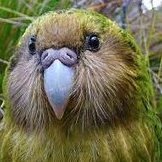
6 pointsI've noticed almost all the fire horse images this year are limiting or eliminating excess fire overtones, which makes sense given the times (that said I love the fiery vitality of Kakapo's horse). But I've seen some interesting brush art that could be a alternative (note: someone should check the characters if we go this route as I just pulled this off the net): Has that vitality / free spirited horse energy without the war undertones. There are a lot of good looking similar ones out there if a more horizontal one would fit better.
-
6 pointsOhhhh , okay then I will draw one up myself then .
-
6 points
-
6 pointsI should preface, I'm no expert or academic. I grew up Christian. I grew up poor. Most importantly, I grew up a poor Christian. I turned away from faith, because I demanded so much in terms of knowledge to fix my mistakes and find some avenger for my tribulations. But since I turned 30, I decided that I can't continue like this. My life felt like a grotesque sludge that encased me, and above me, in a blackened mirror sustained on the ceiling, I saw what I was and what I was becoming. Cynical. Miserable. Angry. Hateful. So long, I've been lost. And lost, I think, is an odd way to describe it. I had no path. To be lost, is to have a destination. And there was nothing I was moving towards. And then, recently, I discovered the Tao De Ching. I just finished it, and have found two translations of the Secrets of the Golden Flower to next read. This has... Changed my life. I don't feel lost anymore, because I realise I'm not pursuing anything. For so long I've had the GPS open, wondering why it wasn't showing me the best route, and yet I had no destination in mind in the first place. For so long I've wanted out. Out of the present. Out of the past. Yet I seldom considered tomorrow anything but a lamentable fact. And now I see that tomorrow is a blessing and I'm lucky that I have yet another day to try and understand the Dao. The quiet is no longer overbearing. My racing mind is no longer a curse. I have read a hundred books with 100,000 words laid out, all that say nothing. Yet the Tao Te Ching, with 1/20th the words of even a single one of those pieces has my eyes opened. I just wanted to thank this subreddit. I found it today, but I'm just glad there are others out there. The world feels so much more gentle.
-
6 points
-
6 pointsMy 2025 started off rough, by spring I attempted a move. Didn't work out. Late summer, tried another move, didn't go as planned, yet, worked out in other ways. Fall has been good. Beginning this winter much better than a year ago. Reflecting on 2025, personally,,, new found direction. Looking at 2026, looking forward. Knowing, things continue to change. I learned a new way to offer Cheers, salut, etc And to all ya'lls bums, I raise my glass sans clinking Formidable!!
-
6 pointsI read the title of this thread as ‘Saving Private Neidan’ on first take made me laugh.
-
6 pointsHappy shortest day everyone!
-
6 pointsPracticing nei dan from whatever you read on tdb will lead you to hell, a quite personal hell, because you are practicing wrong. Find a realized teacher.
-
5 pointsWhat Ba Gua Zhang has deleted from my system in recent times: 1. Arguing with others ---> Who really cares, everyone has their own opinion. 2. Resentment. No time for that. If someone disrespects you, that's their problem. 3. Lust. I don't touch females, I don't want to sleep with them. Deleted but the Yin runs deep and in my dreams sometimes females approach me with interest which means it is still an issue that needs to be cleared completely. 4. Anger. Gone for good. It is a tough one to beat but not as difficult as no. 3 To be removed: #Material possession The magic of walking the circle which slowly deletes everything until nothing is left. The sky is the limit of what circle walking really is and does to the practitioner.
-
5 pointsWhatdaya think?
-
5 pointsPerhaps what we need is a water horse to balance and calm things down a bit.
-
5 pointsSee what you think!
-
5 points
-
5 points( Not sure if this should be in this general section or the teachers sections ? Mods, feel free to move it ) First, I am not going to try to sell you anything or 'sign you up' for lessons . This about the Tao te Ching ... not the Tao te Ka-Ching! ' Ch 1 . There is this thing . Its also not a thing . Also it is both a thing and not a thing. It also is neither a thing or not a thing. It is all of the above . But it isn't any of them . If you have dont want stuff well - that's a mystery ! If you do want stuff The whole manifested Universe awaits you . let;s say you have two spring rolls both may have the same sauce but they can have different names depending on whats inside them and that can be a mystery of mysteries . Ch 2 You think my sister looks hot but that's because Yo Momma be ugly. You guys can only see either end of the line . But the Sage just sees the whole line . You cant have stuff without no stuff. Stuff is just lines , not ends . Back always follows front otherwise you be chasing your own tail. Ch 3 If you flatter people they will try harder to impress you. If you overvalue stuff you will pay more for it. Try to please people and they will get suspicious. Forget what you know and what you want Stop doing stuff all the time ! Ch 4 If the thing is empty and has no source it cant run out alls it got is little potential n+ s and n- s that make nuthings . Then put your hara in the center of all that . Ch 5 the Universe is neutral Judgement is based on comfort . The space between heaven and earth is the atmosphere It can get windy Stick to the surface or you could get blown away . Ch 6 The valley here is under a 'Big Mom' dome . My teacher said just ask her for whatever you want - you'll get it . Ch 7 heaven and earth last forever Why do heaven and earth last forever ? I just told you it did stop asking questions. If you dont do anything you cant fail at it . Ch 8 be like water then you will be good for all living things and flow along without thinking where you are going who knows where you will end up ? But dont be an arsehole about it . Ch 9 Stop taking and using up all our stuff ! Dont re-tune your lawnmower if it doesnt need it. leave things alone , fer Gawd's sake ! Ch 10 if you can be like a baby woman thats good . (tbc)
-
5 pointsHappy New Year to you Luke, and to the rest of you Bums. May 2026 bring out the best in us!
-
5 pointsAfter many years of practice, the slow spiraling movements of tai chi become part of one´s personality; the habit of deep diaphramatic breathing results in a remarkable steady calm. No doubt this explains why Dao Bums forum members are unfailingly peaceful, remarkably free from the pugilistic impulses that characterize interaction in other corners of the intrawebs. Our tendency towards good cheer and amiability was especially apparent in that area of the site, now defunct, known as "Current Events." Did we always agree with one another? We did not. But even when we found ourselves at extreme idiological odds, we never failed to recognize the humanity and basic good will of our fellows. On that rare occasion when a post resulted in passing annoyance, we looked inward: what unresolved issue within us was responsible for this prick of discontent? Such is the way of the refined heart. And so, with all the gratitude and warm fuzzies I can muster, I raise my glass to you my fellow Bums. May you saunter on into the expanse of the desert or the misty mountains or the bathroom down the hall, wherever your path may lead. Happy New Year!!! LL
-
5 pointsAs you may see, we are considering establishing a private neidan subforum. Unlike most of the TDB, the contents on this forum would only be viewable by TDB members with 20 posts, would be limited to neidan discussion (based on well-recognized texts, established schools and lineages). In other words, it would be a semi-private place for neidan based discussion. The forum title would be visible to AI and general non-members, but posts and comments would not. Before proceeding down this path, I wanted to open up to community thoughts and feedback. Let us know your thoughts/concerns/issues.
-
5 pointsModerator Note: In the interest of intelligibility and inclusivity we would like members to provide translations or at minimum transliterations of posts that include words or text in Chinese characters. This will give posts a wider reach and promote more wide ranging discussion. Thanks. A.
-
5 pointsThe current rule would at least require at least a demonstrable source--- i.e. a reference to either a particular school or text (understanding that schools and text may not always agree). If there is enough demand, I imagine we could create some section with those limitations. I don't think we have the software for that, and even if we did, I don't think it would matter. It is fairly easy to take a screenshot and pull text. Pancakes, arrested, hooker.
-
5 pointsSo true … when alone in solitude I cry out to my master to deliver the blow which will deliver my final awakening .. I pray thus: My loneliness is killing me (and I) I must confess, I still believe (still believe) When I’m not with you I lose my mind Give me a sign Hit me, baby, one more time
-
5 pointsMerry Christmas to all of my Christian friends! May the holiday spirit bring unconditional joy, good health, and peace into your lives. And may we come closer in the coming year to a life of peace and mutual understanding.
-
5 pointsWhere else would it come from? True knowledge of the Dao comes from teachings that humans have written? This happens all of the time in Buddhism, another non-dual tradition - there is even a name for it: https://en.wikipedia.org/wiki/Pratyekabuddhayāna I have actually met one. They are real... and why wouldn't they be, given the nature of the Dao/Enlightenment? I Agree that a realized teacher can be very useful, but completely understanding the Dao isn't a concept that a teacher can pass on, only point to. It isn't an intellectual concept that a person "owns". A realized teacher can point it out anywhere, at any time. Any teacher that pushes the idea that they are somehow the gatekeeper of the Dao isn't fully realized and is greatly deluded.
-
5 pointsPeople can use whatever words and say whatever they want outside of neidan, but if you are talking about neidan, use the correct terminology and meanings
-
5 pointsAs an incomplete saint I help grandmothers halfway across the street. Not perfect but working on it.
-
5 pointsok If you are a spectator of a virtual concept, which has no physical proof, trying to understand the principle of something you don’t believe in, then why did you start a thread called the practice of neidan? Can you explain this because I am lost at this point.
-
5 pointsI think I'll keep them– these rhythms, this reverence. All else I release.
-
5 pointsIt is typical in daoist thought that things are described in either the physical or the subtle. An example in neidan would be how a internal subtle change is made, which then will cascade leading to change in the external. An example of the opposite is in wuji stance, you let gravity pull you towards the earth, this constant pulling leads to small stretches of your relaxed muscles, which will lead to development of more Huang which in turn will lead to better qi conduction. From the physical to the subtle. I think it's completely valid to drag in physics and biology/chemistry into the equation, but the question should be where in the cascading process do they fit in, in whatever specific circumstance is being discussed. As a daoist you'd either make a small change that sets off a natural chain of responses, or strengthen an already ongoing natural process, to either speed it up or because the strengthened accumulation will result in an effect the weaker process couldn't make happen without the strengthening. From an internal arts perspective that is... A long rambling basically to say that i agree As for what concepts are related or not, that's probably as much of a matter of perspective and personal opinion or even preference for how minute or detailed things should be laid out.
-
4 pointsI haven't seen this one before .... and never noticed a discussion here on it . Eg Ch 1 If you can talk about it, it ain’t Tao. If it has a name, it’s just another thing. Tao doesn’t have a name. Names are for ordinary things. Stop wanting stuff; it keeps you from seeing what’s real. When you want stuff, all you see are things. Those two sentences mean the same thing. Figure them out, and you’ve got it made.
-
4 pointsAfter a year, it seems like your problems are ongoing, and none of the suggestions here are likely to work. I'm going to lock this thread and just suggest that you lean on proven, practical Western medicine for your issues, first and foremost. Go to a general practitioner and seek a counselor to talk about these issues and they might be able to help diagnose your issues and get you back on track. Thanks to all of the concerned Bums who have chimed in. _/\_ - Stirling (Mod)
-
4 pointsThen the devil played another trick; convincing the the world there was only one devil. Ah folks see it. How could it be invisible? It's been broadcasted non-stop to the point, folks have become desensitized to it. "Rocking the boat" causes collateral damage as well. It isn't that folks are scared and weak, it is a sobering situation, and needs addressed in a way not rushed, which plays into the elites hands. Oh, shit, did I equate elites with evil?! Not necessarily, although,,, Don't hold your breath on everyone uniting as one. There are small groups that have stated objectives of holding accountable the ones who are dangled by the strings. The ones dangling and tugged by those strings are the truly weak. These intrigues are often inside jobs and border on the political fringes What usually happens in times like these, when the curtain has been drawn open and evil takes off its mask, is the world is dragged into major war. The 4th generation theory Because it is held by the elites that after a big war, folks can be controlled for three generations. Civil wars prevent revolution. Evil has carefully constructed presumably safe haven hideouts to weather the coming storm and the rest of us face horrendous odds of merely surviving. Let alone, feel good about it. There was a mural I was shown in 1978, in an air force hardened bunker,9 forecasting today's landscape and the coming aftermath; there was a caption: "The living will envy the dead" Apologies everyone for posting this. And, sometimes perhaps, predictive murals get it wrong. There is always hope. There are already places where there is no room for the faint of heart. Perhaps coming soon to a location near you. So, there could be some facsimile of a grand uprising. They do occur, rarely. Civil wars, mixed with the larger war mostly. Every now and then a true revolution. My approach is on the side of choosing to be Meek. Not to be confused with weak. A holistic grass roots effort, emphasizing kindness and service to the poor and downtrodden.i deliver meals to disabled seniors it is a little thing. But enough little things by those on the other side of the spectrum than the elite, do add up.
-
4 pointsThere´s plenty of bad around if you look for it. And yet the sun still shines and the grass still grows. Look around and you´ll discover people painting, writing books, eagerly awaiting the right time to plant spring flowers. Kindness is everywhere. To see the good is not to deny the bad; on the contrary, our awareness of the good will give us the strength we need to deal with the darkness.
-
4 pointsBah, there’s already a hundred “illuminated translations” out there. Going forward I am happy to represent the quale grokker community.
-
4 pointsFor a long long time. So yeah, a little bird chirped to me there is talk about TDB having a core of an older crowd. I chirped back to that little bird, stick around, you ain't seen nothing yet. Daoist Longevity Practices is definitely a thing. I'm sure talk will get around to Li Ching-Yuen. Let's start the thread by looking at DVD That's right Dick van Dyke looks at his 100 years, and he provides so many examples, lessons, thoughts, on longevity. If we imagine someone to have a positive outlook, ability to brighten up other's day, Relaxed physicality, ( if you need to see what song/sung looks like, look no further) Staying active, still goes to gym three times a week, to avoid stiffening up. And a sense of humor and a warm caring heart. This is how one gets Longevity. Yes, he is rich and that helps I'm sure. But being rich is not what defines him.
-
4 pointsThis may not be a symptom of progress. When the mind is truly quiet and open, not grasping, there are qualities that arise spontaneously - warmth, joy, compassion, and creativity, and there is some sense that anything satisfies. The absence of these energetic manifestations of the base is an indication that something is blocking our progress. Often it is an aberrant view such as nihilism or an unbalanced practice, prioritizing the mental over the physical and emotional, for example. Another common cause of this sort of deviation is bypassing, neglecting to bring our real life challenges onto the cushion, or neglecting to bring our practice into life's activities, in a way that supports genuine transformation. Something to consider if you feel like there is something lacking in your life or your practice.
-
4 pointsAnother factor is that those "serious things" are often quite secretive, sometimes for good reason, perhaps sometimes not. I know that I feel uncomfortable sharing things my teacher asked us to keep to ourselves, be that personal experiences and insights from practice, specific information, or practical instruction. In part this is because certain information can be useless, misinterpreted, or even harmful when pursued before the student is prepared. Not saying a focused and well--moderated neidan forum would necessarily be a bad idea but I do think there will be challenges.
-
4 pointsProbably, but it may be hard to find. Even neigong the real deal is something that is mostly taught in private, one on one, for all kinds of reasons. E.g. "pearls before the swine" is avoided, "teacher tell all, go hungry" is another consideration, persecution of taoists that repeated many times throughout history (communists didn't invent it, emperors did long before them) and what not. The culture has always been big on "family secrets," "secret skills," "secret manuals," "secret formulas,' "secret transmissions" and so on, from neidan to porcelain to herbal formulas to martial styles, it was more common than not to not tell everything, and often tell nothing outside the family or school. This is not just history, this is also true in our time. Even though a lot of Chinese movies and Jin Yong's novels are centered around the pursuit of such secrets , all of it has a real-life cultural counterpart. If the private forum materializes, I might tell a story or two... can't share in a public space, so for now they are secret.
-
4 pointsOnce upon a time, Zena the Poet was asked to describe what it feels like to ride a bike. After a moment of reflection, she recited: Balancing on my butt-bone I press my toes onto the pedals As the wind rushes through my hair A thousand years later, Albert the Learned was seen sitting on a block of wood while smushing flower petals under his feet, with a fan pointed at his head. When asked what he was doing, he replied "I am riding a bye cycle! You probably wouldn't understand it."
-
4 pointsWhy do you think that everyone who has experience in a daoist neidan lineage disagrees with Chidragon? Everyone telling him that and still he does not listen at all. As if all these genuine practicioners know nothing. This has nothing to do with predjudice..... but everything he says is so many lightyears away from even basic neidan understanding it is almost impossible to think he is not trolling. It would be like if i say i know how to bake a cake and talk about how it is made of sand and dirt .... and baker would come and say "no this is completely wrong" but i would accuse them to be the baker police and they being full of predjudice.
-
4 pointsCD is not a troll, he is very genuine always. And his views are based on a lifetime of serious study and practice. All this agitation about a different opinion - should make you think about your own prejudices. If this was the case, it would be of the utmost importance to study CD's view - forewarned is forearmed. I second that.
-
4 pointsI just can’t imagine practicing qigong or tai chi for decades and not ever feeling qi. Surely the thought that there might be something wrong with whatever you are practicing must have occurred once.
-
4 pointsPutting into question the existence of Chi and the Dao on a mainly daoist forum in a topic about the practice of neidan...... I'll leave it at that...
-
4 pointsI found this article on Qi to be interesting. Can't say I agree with everything it says but some here may appreciate it. https://pmc.ncbi.nlm.nih.gov/articles/PMC10874819/ Despite its growing utility I would urge some caution in relying too heavily on AI to explain neidan, among other things, regardless of language. AI does not have the power of human discernment, something I consider important when it comes to meaningful understanding.