
ChiDragon
-
Content count
9,822 -
Joined
-
Last visited
-
Days Won
19
12 Followers



.thumb.jpg.7621d8e4dd2d0d878c4efc817a267564.jpg)







Recent Profile Visitors
47,090 profile views







.thumb.jpeg.611f83584012f7d113169af2a4fd9318.jpeg)
-
How do you know if a Qigong form truly fits you?
ChiDragon replied to Kati's topic in General Discussion
You are making progress, just continue with what you are doing. Your breathing will be much deeper and deeper. It will become your natural breathing habit. Just breathe like that normally, then, you won't have to be concerned with breathing as you would have before you practiced qigong. Best of all, your body will carry out all the biological functions to keep your body in tune. FYI The metabolism is the healing system. It will repair any damage to the body cells to keep your body in tip top shape. That is progress from the long time practice of qigong. Progress is not accomplished by the hours practice per day. Rather it is by the diligent practice every day for many years to come. -
Ungrounded despite grounding – is this a mismatch?
ChiDragon replied to Kati's topic in General Discussion
Yes, you would be a genius, that was why I said try. -
Ungrounded despite grounding – is this a mismatch?
ChiDragon replied to Kati's topic in General Discussion
It means try to relax with no tension on the muscles. -
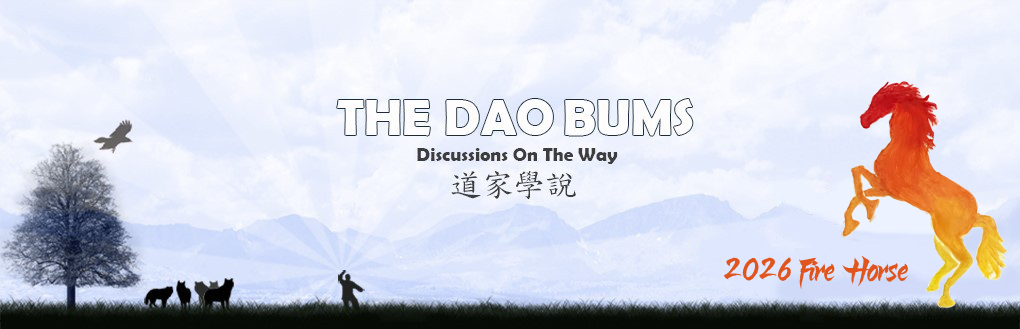
This is the famous bush painting of 徐悲鴻( Xu Beihong) He Could draw other animals too, but horses are his best masterpieces. https://i1.kknews.cc/YNphG0LQS8ywl2xiQV_kicQOhtXuhl6_bQ/0.jpg https://i1.kknews.cc/7Y-lovPkQ1TfcOkCGqTHYaHb9a4PHhTjPA/0.jpg https://i2.kknews.cc/ff5jZZE5HY-gJd76qrr-AyCxBsyipIX0VrEQvyc/0.jpg https://pic2.zhimg.com/v2-030be07d38ec7558f927f15a35b40a19_720w.jpg?source=172ae18b
-
Yes, TWO horse looks too artificial. The color is just don't blend in with the background of the banner. ONE was painted by a famous Chinese brush painter. It looks very natural. IMO it is a best fit to blend in with the background of the banner.
-
IMO It is not necessary to exhale through the nose for abdominal breathing. It was recommended to breathe through the nose for all methods. It is because the nose is for breathing and the mouth is for eating. Exhalation is allowing the abdomen to be fully contracted. This method is considered to be the normal abdominal breathing.
-
People always talking about the macroscopic view of what they are practicing. However, there was not much emphasis in breathing and sometimes just mentioned lightly or just ignored it completely. Here are some of the breathing techniques from an AI summary for you to review or comment. AI Summary To enhance relaxation and energy flow, consider these Taoist breathing techniques: Abdominal Breathing: Inhale deeply through the nose, allowing the abdomen to expand, then exhale slowly through the mouth. Four-Part Breathing: Inhale for a count of four, hold for four, exhale for four, and pause for four before the next breath. Reverse Breathing: Inhale while drawing the abdomen in, and exhale while allowing it to expand, promoting internal energy flow. Natural Breathing: Breathe naturally and focus on the rhythm, allowing the breath to become deeper and slower over time. Breath Counting: Count each breath cycle up to ten, then start over, helping to maintain focus and calm the mind. Visualization: Imagine energy flowing through the body with each inhale and tension releasing with each exhale. Ref: https://realitypathing.com/a-beginners-guide-to-taoist-breathing-techniques/
-
Anybody else having connectivity problems lately?
ChiDragon replied to Mark Foote's topic in Forum and Tech Support
The system is extremely slow today. It was hardly respond, even though, with many clicks with the mouse. -
FYI You do not burn up your Jing through porn use. It is rather, if done too often, you are not given enough time for the reproductive system to replenish the Jing before the next use. That is where it is critical. In the interim, you should have done some deep breathwork with Qigong. It will help to enhance the function of the Jing department. Taiji is a very good Qigong exercise. The emphasis is on the coordination of the movements with breathing and vice versa.
-
I practice for good health by improving my respiratory system to breathe better. It is only good for health other than longevity. However, longevity might come with the package. I rather die on my feet than lying in bed with trauma.
-
ONE PS IMMHO The color blends in with the landscape is much better.
-
Why are we still having the snake shown on the front page instead of the horse?
-
Yes, you are playing with fire and that there could be potential health consequences. You should quit that practice while you are still haven't gotten to that point yet. Otherwise, you will be living a very miserable life for the rest of your life. I hope you don't have any health issue right now. If you do, no problem, there is a way to correct the problem. It just require some patience and discipline on your part.
-
Are we going to have this one on the lunar year tomorrow?
-
In general, anything that is out of the control by human, then it is by nature.