

Taomeow
-
Content count
12,048 -
Joined
-
Last visited
-
Days Won
331
Posts posted by Taomeow
-
-
double
-
 1
1
-
-
Interesting thread, thank you.
SpoilerA guy who was a year my junior in high school found me on Classmates at some point and started writing letters. He was a big cheese at the Baikal-Amur railway at the time (with something like 25 thousand subordinates under him) and was trying to convince me to take a trip and visit, with VIP treatment both en route and on location. That was mighty tempting... but those letters he wrote --sometimes they made a whole lot of sense and described a lot of things Baikal I'd be happy to participate in, but sometimes spewed such nonsense that he scared me off. Took a while to realize that the nonsense ones were written when he was piss drunk. Which obviously gave me pause... so that VIP trip was never undertaken. Boo hoo...
-
 1
1
-
-
This thread has lake Bikal and lake Bakai but it is Baikal. Buryat-Mongolic languages origin. In Buryat it is pronounced closer to Baygal, the meaning is something like "rich lake" or "nature" -- I guess it was almost the same thing to the folks who named it.
-
41 minutes ago, Mark Foote said:
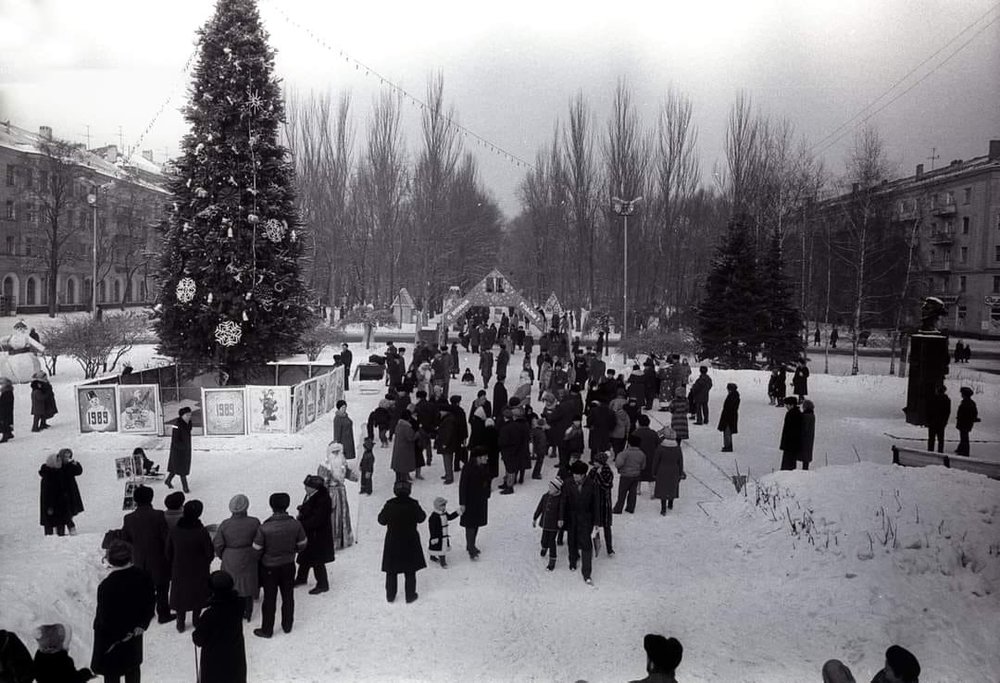
where is this place, please...Pushkin Boulevard, Donetsk.
It used to be my most stomped stomping ground -- the road from home to school, then to the university, then to work. To two theaters (Drama and Opera/Ballet) and two movie theaters. Also a meeting place when planning stuff with friends (many benches to sit on, wooden and comfortable). A dating launchpad (the monument on the right is to Alexander Pushkin, referred to by the locals as "The Head" -- circa high school years, if undecided in advance where to go or if to go somewhere with this guy at all, agree to meet "under The Head," take it from there). And a walking strip with kids -- in a stroller first, and later on foot. Roughly 15-20 minutes to get anywhere at all from home. No car and screw public transportation. It was a lucky location in that respect.
-
1
-
 2
2
-
-
3 hours ago, Mark Foote said:Where am I!?
Do you mean "where is this place" or "why am I not in this picture?"

-
1
-
-
On 12/15/2025 at 7:54 PM, Nungali said:and I liked it when you posted it before too ...
Ack, I forgot.
"There was a study" (got to use this ridiculous phrase that, without further examination, has 0% information validity value in all cases) which asserted that people who live together for a long time use each other as extended memory files, which benefits their individual memory. Perhaps people who post together for a long time also reap those anti-forgetfulness benefits?
On 12/15/2025 at 7:54 PM, Nungali said:Nothing like a gopher tuna !
My favorite lines were, "This octopus, let's give him boots, send him to North Korea" ...and the way they rhymed it with "gonorrhea."
-
1
-
1
-
-
@Nungali This song was probably written by one of those former little catholic kids -- just the way they heard it.
I think it's brilliant, phonetically and poetically.
-
1
-
1
-
-
4 minutes ago, Mark Foote said:Cold morning, train horn
blow, whistle freight train--take me
far on down the track
Far on down the track
there's a monkey on the train
singing a sad song
-
1
-
-
9 minutes ago, Mark Foote said:Lorem Ipsum
Yes, that was explained under the story post factum, and redditors also explained that it happened because the newspaper laid off everybody who used to be responsible for these things not happening. (Not its first rodeo with sloppiness.)
-
1
-
-
16 minutes ago, liminal_luke said:My favorite high school English teacher had a plaque on her desk sporting the words illegetimi non carborundum. She was an unusually self-possessed person, someone who took that motto to heart. I´ve since read that the phrase isn´t actually proper Latin but it does come in handy from time to time, especially here on the forum and elsewhere online.

Yes, it's a wise saying even thought it's fake Latin. A motto especially apt for a high school teacher to live by.

There's a whole bunch of not quite real Latin proverbs I remember, some "almost" the real thing... like, Lingua Latina non est penis canina. And a friend, a med student at the time, once commented in all seriousness when we were planning a picnic in the woods and it started raining, Per aspera ad anus. This one has since become my favorite expression for when things one carefully plans and looks forward to go bust for whatever reason. It's exactly the same idea which Shakespeare expressed in his characteristic, much more flowery way:
And enterprises of great pitch and moment
With this regard their currents turn awry
And lose the name of action.-
1
-
-
13 minutes ago, liminal_luke said:I missed my calling -- shoulda been a journalist. When writing for English-speaking audiences, I never accidently slip into foreign tongues, and certainly not Latin. Well, maybe a phrase or two for "texture and color" -- porque no? -- but never an entire paragraph.
I have some random Latin in my head from the university course, but the last time I was able to read the news in Latin was circa the Bello Gallico time -- which was current events around 50 BC.
-
1
-
-
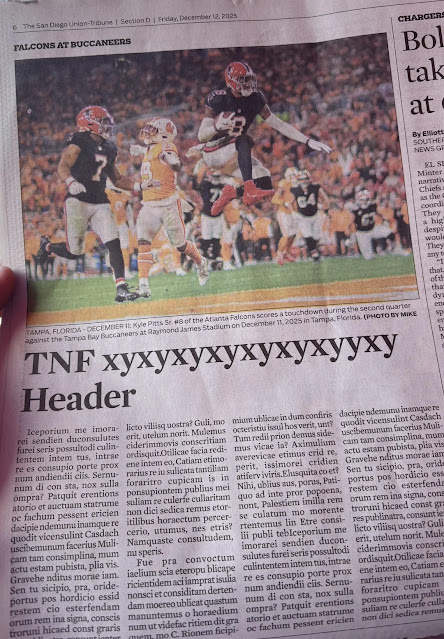
Everybody knows paper newspapers are in decline -- but this article appeared last Friday in the San Diego Union Tribune both in its paper version delivered to subscribers and the digital online version.
The article itself is in Latin (not the first, second, or 100th most spoken language around here), and its title seems to clash with the editors' attempt at classically educating the readers, if that's what they had in mind.
-
 1
1
-
-
Very refreshing.
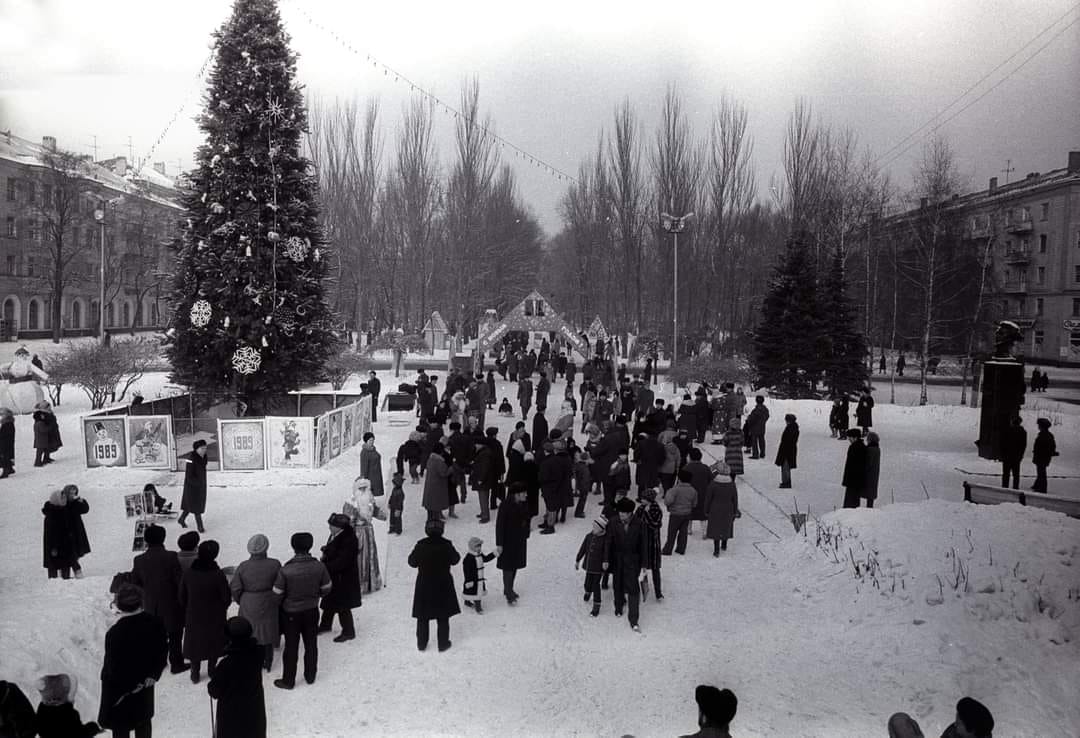
In my then-atheistic old country we used to celebrate the New Year with the same gusto that was reserved for Christmas in the non-atheistic parts of the world. This is the picture of the last New Year's tree I saw, located within a short walking distance from where I lived. It wasn't the main one in the city, and therefore not the biggest -- but it was nice, and fully real.
Our Grandfather Frost is not unlike Santa, but dresses somewhat differently (the hat especially) and doesn't go down the chimney, nor scrutinizes kids for who's naughty and who's nice, everybody gets a present. Adults didn't exchange presents, those were exclusively for kids -- whereas adults just threw and/or attended a party, usually the biggest party of the year.
-
4
-
-
1 hour ago, Nungali said:New Caledonia ? Captain Cook sailing north and looking back ?
I grew up with a song (by a brilliant singing poet) dedicated to musing about the reasons Captain Cook got eaten... though apparently modern revisions deny it. In any event, I am quite foggy on his route so I wouldn't be able to say if he be sailing north before, after, or instead of being eaten.
1 hour ago, Nungali said:Maybe a Feng Shui navigator in the Zeng He expedition
That's a possibility.
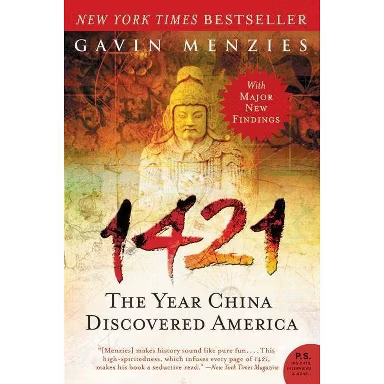
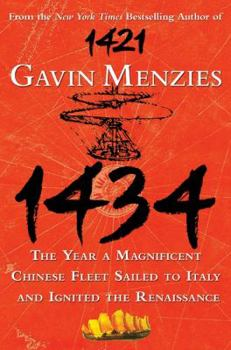
(Have you read 1421 or 1434 by any chance?)
-
2 hours ago, Nungali said:We have a coastal town further south , right on the coast, out on a type of peninsular called ' South West Rocks '

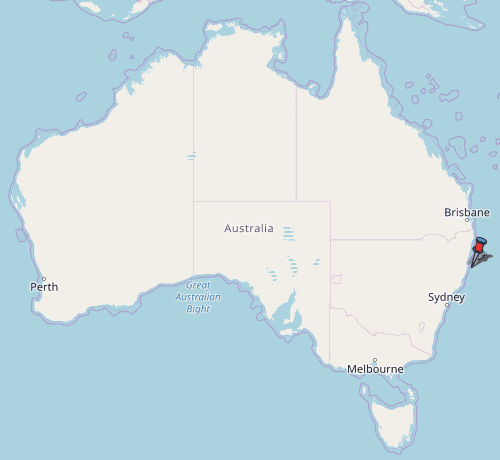
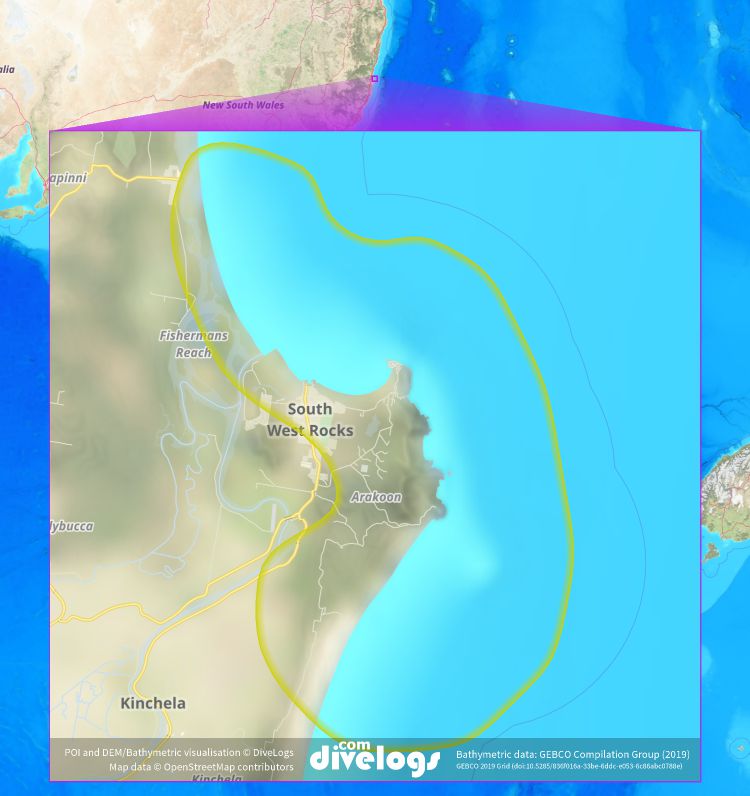
sometimes I visit and a few times I have asked , ''What is South West Rocks, south west of ? '' Most look blank, or laugh or dont understand the question ?
Looks like it's not south west of anything at all... well, maybe something on that coast that is not as south west as this place. Some stray rock to the northeast of those rocks?..
However, this only concerns Western maps which, for reasons of the West not having had the yin-yang revelation and its relevance to us humans (who have our cold feet below, interfacing the earth, and our hot heads above, interfacing the Sun), counterintuitively place South (yang, the top, overhead stuff, where the Sun is in relation to everything on earth) on the bottom, and North (yin, the below, underfoot, where the sun don't shine) on top. Not so on taoist maps. In the canonical taoist Luoshu layout southwest is not far from where that South West Rocks is... perhaps a feng shui master was the one who named that place?
In any event, I feel compelled to insert an interlude depicting a delightful case of a Western influence on a member of an Eastern culture. (They are not all delightful IMO, far from it... but this one is.)
-
Yes, geography is in the eye of the beholder. The most famous classical Chinese novel, Journey to the West, is about a trip to India. That journey was undertaken by a monk and his travel companions commissioned by the boddhisatva-turned-taoist-goddess, Quan Yin, for the specific purpose of bringing Western influences to China --
to wit, Buddhist sutras, toward a wide dissemination of Buddhism. (An immigrant who wanted to introduce to her new country of allegiance certain values from her native culture... makes sense to me. I've taught many Americans to make real borscht out of a similar sentiment.)
The novel was published in the 16th century and depicted the events of the 7th, with a fantastic twist or two.
Until modernity Buddhism was the single biggest Western influence on Chinese civilization. I have been less successful so far with real borscht and American cuisine.
-
1
-
-
7 hours ago, 心神 ~ said:The leaves have fallen
Frost creeps along window’s edge
Within, lantern warms
Within, lantern warms
the scholar's simple study --
books, brushes, inks, cats.
-
4
-
-
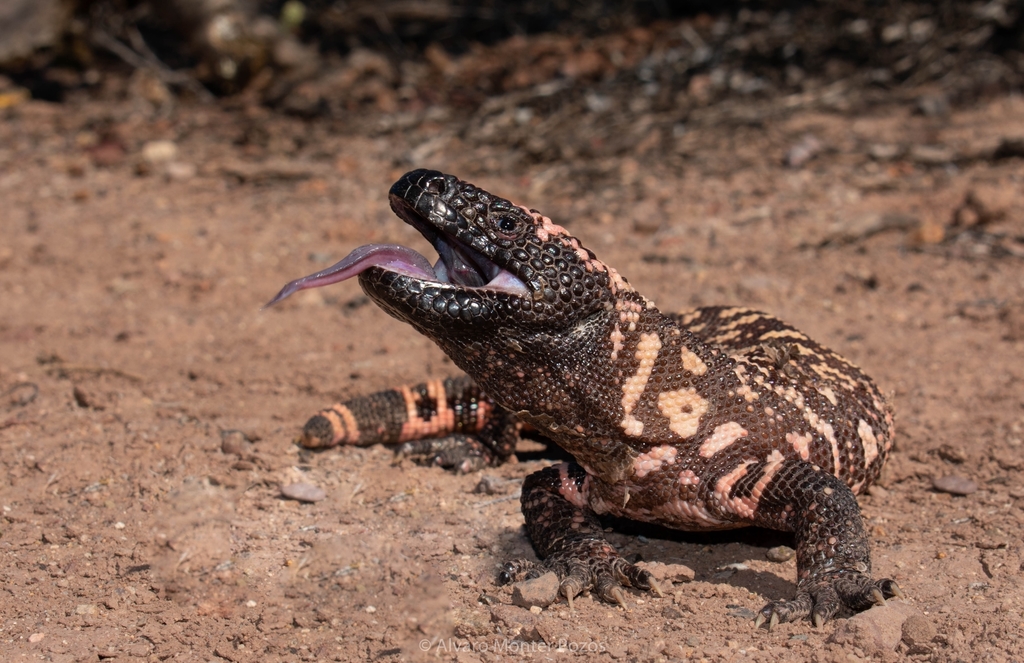
"Researchers" studying the venom of the Gila monster (Heloderma suspectum) discovered a peptide (small protein) called exendin-4.
They noticed it had a striking similarity to a human gut hormone called GLP-1 (glucagon-like peptide-1).
GLP-1 is released after eating and helps regulate blood sugar by stimulating insulin release, suppressing glucagon (which raises blood sugar), and promoting a feeling of fullness.
Natural human GLP-1 breaks down in the body in just 2–3 minutes.
A drug "scientists" derived from the similar peptide in Gila monster venom mimics human GLP-1 but is far more stable — it lasts in the body for a week.
For the Gila monster it is likely an evolutionary adaptation: the venom helps immobilize prey by lowering its blood sugar.
The adaptation and massive amplification of this mechanism for humans is the drug Ozempic.
Evolution nervously smokes a joint in the corner of the room.
-
2
-
-
cmm
-
@Nungali Thanks for the summary. I wouldn't read the article since the premise is ridiculous.
My own explorations in comparative mythology and history of religions back in the day convinced me that there's a direct unbroken lineage connecting indigenous Chinese proto-taoist shamanic practices and later taoist-proper developments that shaped Chinese civilization for millennia to come --
whereas no such Indo-European lineage exists within those ancient systems, outside of some very limited (and only speculative) opportunities to pick up some marginal non-indigenous ideas with trade. The commonalities between all ancient cultures stem from the fact that their creators shared one common trait, to wit, they were humans. Well, sort of... I'm partial to the origins mythologies and legends that emphasize non-human or part-human "influencers..." Fuxi is one of those, but in general early Chinese pantheon is choke-full of such characters -- as is Mesopotamian/Sumerian lore... That's where one finds the most striking similarities in mythology. But stuff like wheeled carts? Burial of nobility with all their worldly possessions that may have included those? Binary systems, in a species that is, well, anatomically mostly binary-symmetrical? Bah humbug...
-
1
-
-
1 hour ago, ChiDragon said:I will not argue about this with your preconceived idea. So, peace!
Not "preconceived." Experiential. I'd rather you don't argue with me about anything (key words "you" and "me," not you and anyone else or me and anyone else) but that's up to you of course.
-
48 minutes ago, ChiDragon said:Please read the question carefully. This is a pure study of the hexagram before the application of divination. The first step is to understand the fundamental concept of some basic hexagrams.
I'll give you something to read carefully when I have the time and inclination. You may be sorry you've asked.
You know how to read modern Chinese. That does not translate into the study of the I Ching.
51 minutes ago, ChiDragon said:Please keep in mind that the invention of Yijing was not intended for the purpose of divination.
You can read modern Chinese but for some reason refuse to apply the skill to the study of the I Ching.
"Please keep in mind" that, YES, the original Zhouyi (the I Ching as it existed around 1100–1000 BCE) was created explicitly and exclusively as a divination manual. This is the consensus among virtually all serious (rather than pop) Chinese scholars today (Li Xueqin, Liao Mingchun, Liu Dajun, etc.) and is supported by hard archaeological and textual evidence.
Which I would provide if you were paying attention.
-
56 minutes ago, ChiDragon said:Very good. If I stack 坎 on top of 艮 to make a hexagram, it will make an image with water on top of the mountain. How would you interpret this hexagram?
What is it telling or suggesting us?
It gives a STATIC image of hexagram 39. The I Ching is the Book of CHANGES. I.e. the whole point is to use it in a way that reveals the DYNAMICS of changes.
In order for hexagram 39 to "tell or suggest" anything at all to me personally (or to the person I'm performing the divination for), I need to present a particular situation and the I Ching will "translate" it into a blueprint of the configuration of energies or time and space that form it for me right now (including my own but not limited to my own.) Toward better understanding that blueprint I will present the situation in the form of inquiry, i.e. divine my best course of action (or inaction) in this particular situation -- either toward what I hope for it to develop into, or in order to avoid the outcome I don't want it to develop into.
So if I draw this hexagram in a divination, this one specific hexagram out of 64, I will take it as the closest approximation of the situation I'm asking about. In the course of the divination I will determine if I've got any changing lines (learn how, it's easy). If yes, I will have to look at the resulting second hexagram - - the situation into which mine is changing if I take this course of action or inaction. Next I will have to analyze the overall hexagram 39 image and the specific place and significance of the changing lines, their position and its implications. (Learn how, it's not easy.) Strong or weak, supporting or threatening my intended course of action, promising success or warning to expect failure unless I change it. I will ignore all other lines in the hexagram because they are not related to the situation (and if I don't ignore them I might get confused with contradictions -- say line 3 promises success and line 6 guarantees failure. I need to know which one is about me right here right now, not all possible outcomes for anyone in any similar situation at any different time.) However, if I get no changing lines, I will read and contemplate the hexagram as a whole, and expect the situation to remain the same in the foreseeable future no matter what I do or refrain from doing.
If there are changing lines, after studying the initial hexagram's image and the significance and meaning of the changing lines, I will move on to analyzing the second hexagram obtained, the one into which the original hexagram changes. Here the likely future outcomes are foreshadowed, giving hope or warning. I will focus on the overall image and contemplate that. And then I will consider the overall picture and decide upon the course of action I was inquiring about.
A static study of the I Ching outside the process of obtaining changes in a divination is akin to studying the phone book. Remember those? The Yellow Pages? Lots of valuable information... and no meaning to you personally whatsoever, or anyone else -- unless they need to look up a particular phone number. (Except the I Ching, in a concentrated, not immediately obvious form behind the visible form, is way bigger than the Yellow Pages -- waaaay bigger... but to comprehend how big you need to "look up" just one number for starters, and try making a call to see if that number works.)
-
1
-
-
2 hours ago, Sanity Check said:And so in terms of wisdom and intellect I'm still waiting for someone to put forth a good explanation for why or how intuition based mysticism might be considered worth pursuing. When there is so much that can be done with logic & data.
Either one is the product of the cognitive processes of half-brainers. Half-brainers, who constitute the majority of our contemporaries, use both hemispheres of their brain of course (at least most do), but in sequence, not together. As one insightful half-brainer put it, "I can solve a complex math problem and I can sing a deeply touching song, but I can't sing a deeply touching complex math problem."
Well, a whole-brainer can (metaphorically speaking) and does. That's what using both the left and the right hemispheres simultaneously rather than in sequence is like. And that's what the study and use of the I Ching is like. It's both designed for a whole-brainer and helps develop the ability to use one's whole brain.
-
2
-
Who are these people ?
in The Rabbit Hole
Posted
That Ermakov book was first published in 1995. The 90s were the lawless decade for the freshly collapsed USSR, and there's no end to horror stories I heard and read about those times... but they were unique in that respect, those times I mean.
I did take that trip as a toddler, and I could swear I remember stuff -- except my mom told me stories about it later, so it's hard to tell now which ones I really remember and which ones came alive for me based on what she told me. If anything, according to my mom people on the train were afraid of me, because I looked like a much younger child but talked like a much older one --
they thought I was some bewitched infant, and some old ladies discreetly made the sign of the cross...